8MM laminated marble: how ultra-thin stone opens up wall cladding and furniture design
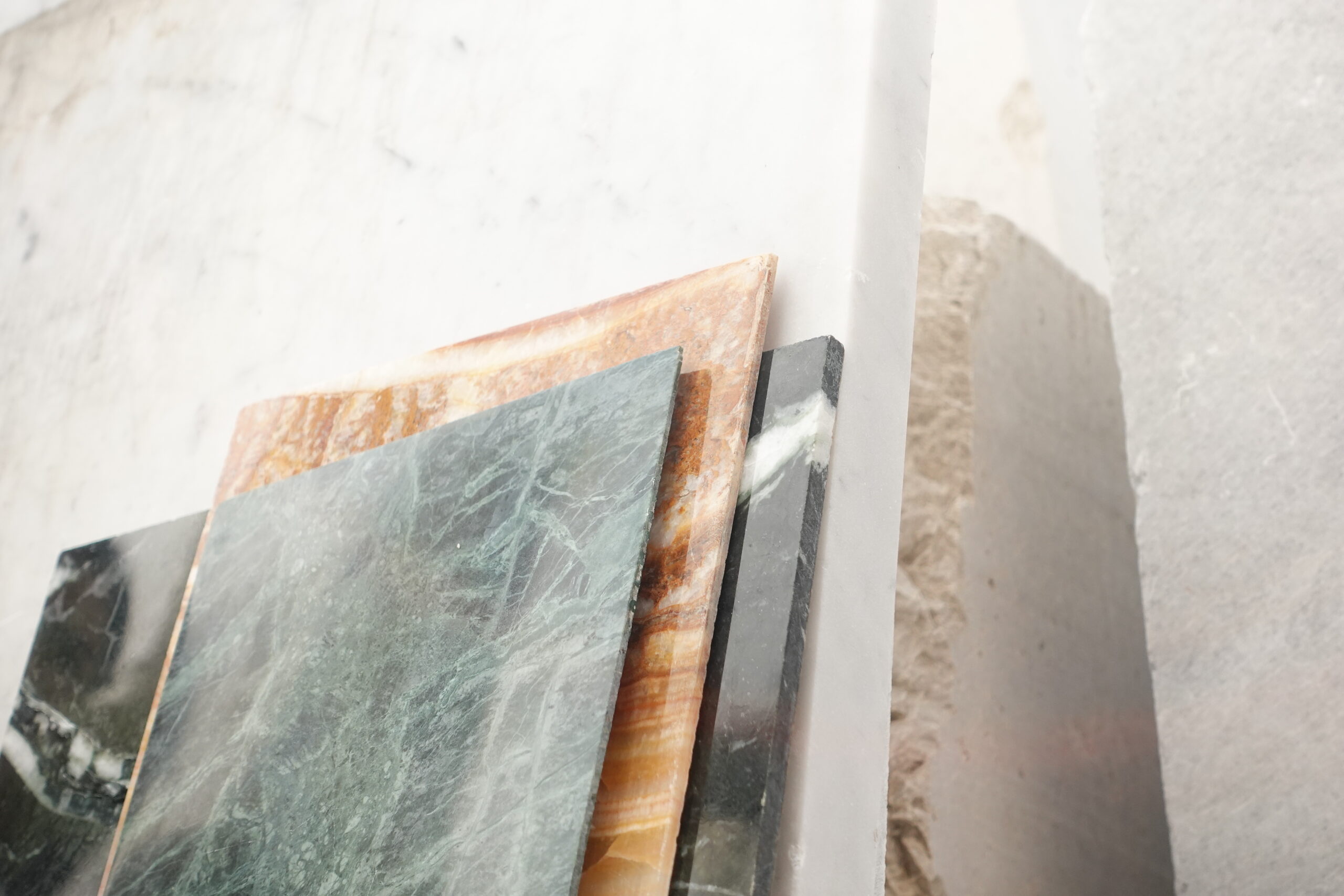
8MM laminated marble is a technique developed at MM Galleri, beginning in 2002, that mills a slab of natural stone down to roughly eight millimetres — sometimes thinner still — and bonds it onto a rigid substrate of glass, wood, or metal. The stone keeps its veining and its light; the weight it once carried, it does not.
What Does 8MM Laminated Marble Actually Mean?
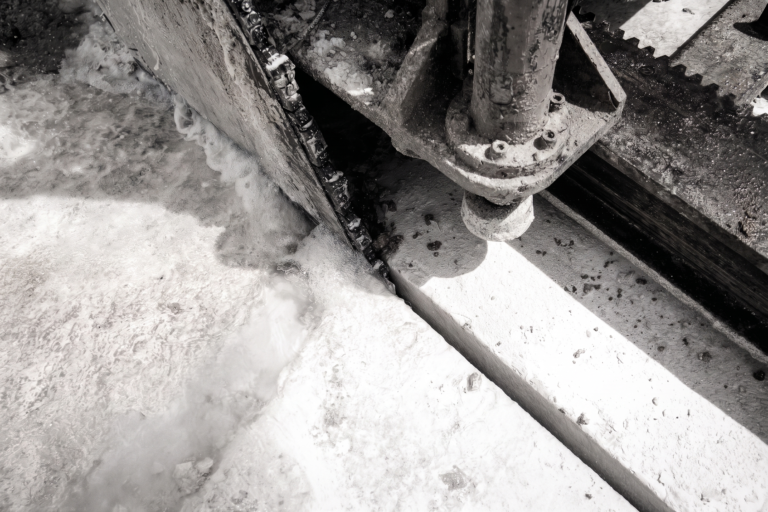
The name is literal, and also a little modest about what it describes. In 2002, MM Galleri began refining marble slabs down to eight millimetres in thickness, then continued the work of thinning further as the technique matured. A slab that thin cannot stand on its own — so it is laminated, bonded to a substrate of glass, wood, metal, or another material chosen for the application at hand. The substrate carries the structural load. The stone carries the story: the veining, the translucency, the character that made someone choose marble in the first place.
This is different from a solid slab cut to standard thickness, which is typically two to three centimetres and relies on its own mass for rigidity. 8MM removes that mass and replaces it with a partnership between thin stone and a supporting layer beneath it — custom-sized to the design, not the block.
How does lamination change what marble can do?
Solid marble is honest about its limits. A slab thick enough to span a countertop or a floor unassisted is heavy — heavy enough that ceilings, curved furniture, and large freestanding walls have long been the domain of lighter materials, with marble reserved for surfaces that could bear its weight from below.
Lamination rewrites that constraint. Once the stone is bonded to glass, wood, or metal, the composite panel behaves like a finished material in its own right — liftable, mountable overhead, workable into shapes a raw slab would never survive being cut into. Wall claddings. Furniture. Lighting fixtures where a thin veneer of onyx or marble glows when lit from within. Ceiling panels that would be structurally implausible in solid stone become straightforward in 8MM. The stone stays stone. It simply no longer asks a wall or a floor joist to hold it up.
Why does the cost math change too?
Thinner slabs are not only lighter — they are also more efficient to cut. According to MM Galleri’s own figures, the 8MM process yields 40% more slabs from a single block of stone, and delivers 40% more cost efficiency on expensive stones in particular. For a rare marble, an onyx with dramatic veining, or a stone quarried in limited quantity, that yield difference is the difference between a material staying within reach of a project’s budget and pricing itself out of the room.
The economics matter most where the design calls for a large surface area — a full-height wall, a run of furniture, a ceiling — because that is exactly where solid slab consumption, and solid slab cost, would otherwise climb fastest.
8MM laminated marble vs. standard solid slab
| 8MM laminated marble | Standard solid slab | |
|---|---|---|
| Typical thickness | ~8mm or thinner, bonded to a substrate | ~2–3cm, self-supporting |
| Weight | Substantially reduced — the substrate, not the stone, carries structural load | Full mass of the quarried stone |
| Block yield | 40% more slabs from one block | Standard yield per block |
| Cost efficiency (expensive stones) | 40% more cost efficient | Full material cost per surface area |
| Best-suited applications | Wall claddings, furniture, lighting, ceilings, curved or overhead installs | Countertops, flooring, structural or load-bearing surfaces |
| Substrate | Glass, wood, metal, or other, matched to the design | None — the slab is the finished surface |
| Sizing | Custom, based on design | Bound by standard slab dimensions |
Where has this actually been built? The ION Orchard story
The clearest proof of what 8MM makes possible sits inside a shopping mall in Singapore. When ION Orchard was renovated, the design called for Stella Cream — a marble whose veining needed to read as continuous across an entire wall, not as a patchwork of mismatched cuts. Solid slab at that scale would have meant enormous weight, enormous cost, and joints that fought the veining at every seam.
Instead, every 8mm laminated Stella Cream panel was pre-cut and vein-matched in Surabaya before it ever left Indonesia. Each panel arrived in Singapore as a finished element — sized, matched, ready to hang, needing no on-site adjustment. The Origins book describes it plainly: there was “a poetic simplicity to the arrival.” The install that followed was not a fabrication job so much as an assembly, because the fabrication had already happened, panel by panel, thousands of kilometres away.
Together, the delicate Stella Cream and the meticulous Surabaya craftsmanship shape the new ION Orchard into a sculptural, high-fashion destination, where every surface reflects a singular vision of excellence.
Is 8MM the right choice for a given project?
Not every surface calls for it. A kitchen island that needs to withstand daily wear from above, or a floor bearing foot traffic across decades, is still a job for solid slab and its full mass. But wherever a design wants the character of a rare or heavy stone on a wall, a ceiling, a piece of furniture, or a light fixture — anywhere the structure beneath cannot or should not be asked to carry raw stone weight — 8MM is the technique built for exactly that question.
8MM isn’t MM Galleri’s only answer to stone’s weight problem — Bended curved marble solves it from the opposite direction, thinning and flexing stone rather than laminating it flat. Lightweight stone panel technology is also being developed elsewhere in the industry; Coldspring’s StoneLite panels are one example of a comparable approach from a different fabricator.
FAQ
What is 8MM laminated marble? It is MM Galleri’s technique, refined since 2002, for milling marble to roughly eight millimetres thick and bonding it onto a substrate of glass, wood, or metal. The lamination lets thin stone carry veining and luminosity onto walls, furniture, and lighting that solid slab is too heavy to reach.
Is laminated marble as durable as solid marble? The stone surface itself is genuine marble, with the same finish and veining a solid slab would show. Durability depends on the substrate and the application — 8MM is built for cladding, furniture, and lighting rather than for load-bearing floors or heavy-wear countertops, which remain solid slab’s territory.
Why is 8MM more cost-efficient than solid slab? A single block of stone yields 40% more slabs when cut to 8MM thickness, and the technique delivers 40% more cost efficiency specifically on expensive stones. Less of the block is lost to cutting a thick, heavy slab, so rare marbles and onyxes go further across a project.
Can 8MM laminated marble be used on ceilings and curved furniture? Yes. Once bonded to a substrate, the panel is light enough to mount overhead or shape into furniture and lighting — applications a solid slab’s weight would rule out. The substrate carries the structural demand; the stone carries the appearance.
What substrates does MM Galleri laminate marble onto? Glass, wood, metal, and other materials, chosen to suit the design and the application. The substrate is selected alongside the stone, not as an afterthought, since it determines how and where the finished panel can be installed.
Where was the Stella Cream panelling at ION Orchard fabricated? In Surabaya. Every panel was pre-cut and vein-matched at MM Galleri’s factory before shipping to Singapore, arriving as a finished element that required no on-site adjustment — what the Origins book calls “a poetic simplicity to the arrival.”