Engineered stone resistance to heat, UV, and moisture has become one of the defining factors in modern architectural and interior design. As surfaces are increasingly used in demanding environments — from outdoor kitchens and façades to high-traffic commercial spaces — traditional natural stone often struggles to maintain performance over time. This is where engineered stone, particularly sintered stone, clearly demonstrates its superiority.
Unlike natural materials that rely on geological formation, engineered stone is designed to perform consistently under extreme conditions while preserving aesthetic integrity.
1. Understanding Engineered Stone Technology
Engineered stone surfaces are created through advanced manufacturing processes that replicate and improve upon the characteristics of natural stone. Materials such as sintered stone are produced by compressing natural minerals under extremely high pressure and temperature, resulting in a dense, non-porous structure.
This process eliminates natural weaknesses such as micro-cracks, pores, and inconsistencies, creating a surface that is far more predictable and durable than quarried stone.
2. Superior Heat Resistance for Modern Applications
Heat-resistant engineered stone is ideal for kitchens, outdoor cooking areas, and commercial environments. Unlike marble or quartz-based materials that may discolor or crack under high temperatures, sintered stone can withstand direct contact with hot cookware and grills.
Key heat performance advantages include:
- Resistance to thermal shock
- Stability under sudden temperature changes
- No warping or surface damage from heat exposure
This makes engineered stone particularly suitable for outdoor kitchens and spaces with integrated appliances.
3. UV Resistance That Preserves Color and Finish
UV-resistant engineered stone surfaces outperform natural stone in exterior applications. Prolonged exposure to sunlight often causes fading, yellowing, or surface degradation in marble, quartz, and resin-based materials.
Sintered stone, however, is manufactured using inorganic pigments that remain stable under ultraviolet radiation. This ensures:
- Long-lasting color consistency
- No surface oxidation or yellowing
- Reliable performance in sun-exposed areas
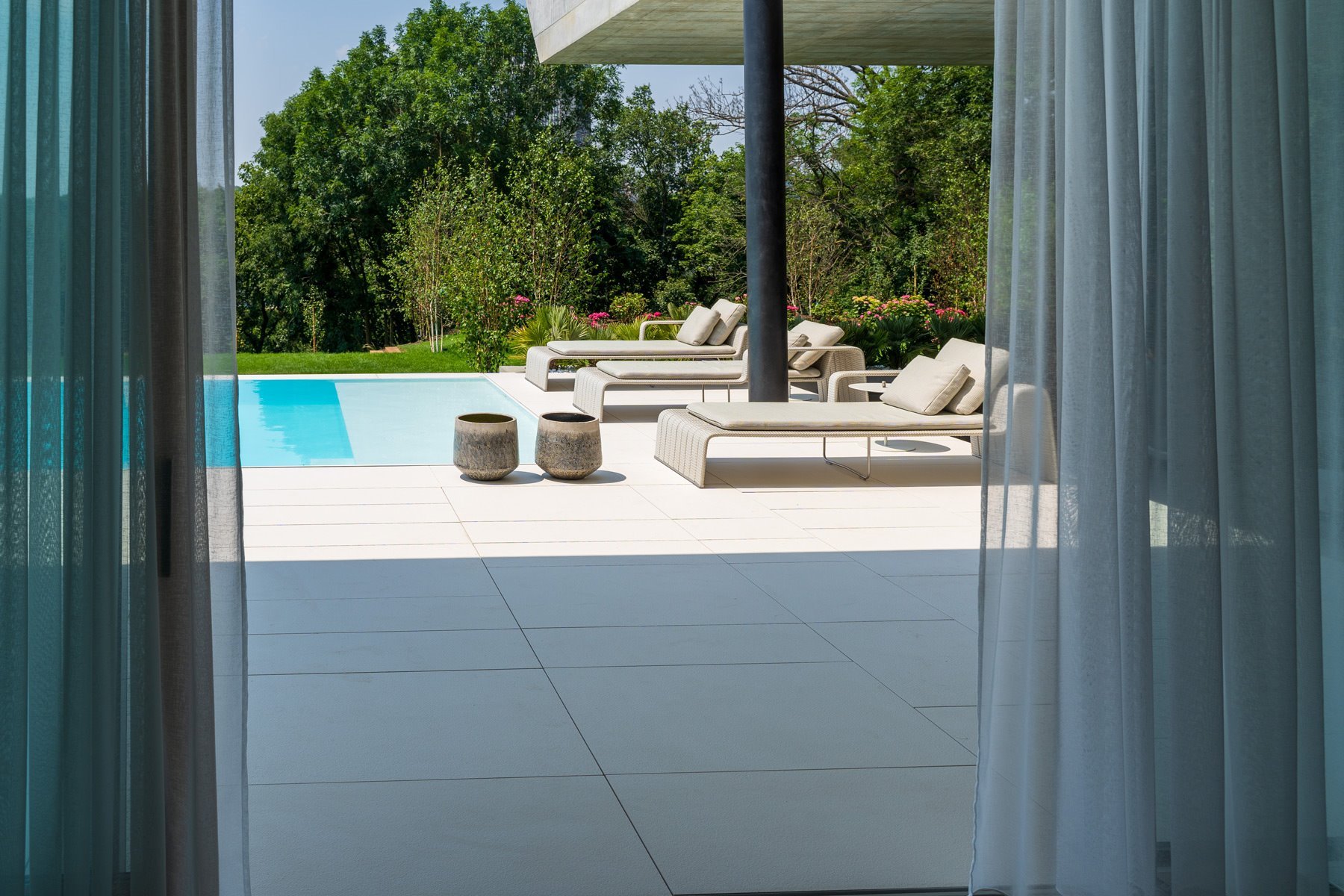
As a result, engineered stone is an ideal choice for outdoor countertops, poolside surfaces, and building façades.
4. Zero Porosity and Moisture Resistance
Moisture-resistant engineered stone offers a critical advantage in humid climates and wet environments. Natural stones such as marble, limestone, and even granite are porous to varying degrees, allowing water, oils, and bacteria to penetrate the surface.
Engineered stone provides:
- Zero water absorption
- Resistance to mold and mildew
- Protection against staining and chemical damage
This non-porous nature enhances hygiene, simplifies maintenance, and ensures long-term surface integrity.
5. Why Engineered Stone Outperforms Natural Stone
Comparing engineered stone vs natural stone reveals clear performance advantages. While natural stone is admired for its beauty, it often requires sealing, careful maintenance, and controlled environments.
Engineered stone eliminates many of these concerns by offering:
- Consistent quality across large slabs
- No sealing or special treatments
- Enhanced durability in extreme conditions
- Lower lifetime maintenance costs
This makes it a preferred material for architects and designers working on high-performance projects.
6. Design Freedom Without Compromise
Design flexibility with engineered stone allows architects to achieve both form and function. Large-format slabs, thin profiles, and a wide range of finishes enable seamless integration across different spaces.
Engineered stone can be used for:
- Kitchen countertops and islands
- Outdoor kitchens and BBQ areas
- Pool decks and wet zones
- Wall cladding and façades
Its versatility supports cohesive design concepts across interior and exterior environments.
Conclusion: Performance That Redefines Surface Materials
Engineered stone sets a new benchmark in surface performance by combining heat resistance, UV stability, and moisture protection in a single material. These properties make it superior to traditional natural stone for modern architectural applications that demand durability, hygiene, and long-term beauty.
With premium solutions curated by surface specialists such as MM Galleri, engineered stone empowers designers and homeowners to create spaces that are not only visually striking but built to endure time and environment.