Hygienic bathroom surfaces have become a high priority in modern interior design, especially in homes, hotels, and commercial spaces where cleanliness and durability are essential. Traditional materials like natural stone, ceramic tiles, and wood are often porous, meaning they can absorb moisture and harbor bacteria over time. Engineering stone including sintered stone products such as Dekton and Lapitec offers a superior solution with its zero-porosity characteristics. These surfaces deliver long-term hygiene, easy cleaning, and a luxurious aesthetic for bathrooms of every style.
What Makes Engineering Stone Hygienic?
Engineering stone is created through advanced manufacturing technologies that apply intense heat and pressure to natural minerals. This process produces ultra-dense, non-porous slabs that prevent liquids from penetrating the surface. Zero porosity means bacteria, soap residue, mineral deposits, and cosmetic products cannot seep inside the material.
This provides several major hygiene benefits:
- No mold growth
- No mildew stains
- No odor retention
- No bacterial contamination
Bathrooms remain cleaner and healthier with minimal effort.
Zero Porosity vs. Traditional Materials
Bathrooms are high-moisture environments, where water contact happens daily on walls, floors, vanity tops, and shower surfaces. Traditional finishes, even high-quality natural stone, can be vulnerable to moisture absorption.
Here’s how zero-porosity engineering stone compares:
Natural Stone (Marble, Granite)
- Needs sealing regularly
- Can absorb stains and moisture
- Vulnerable to soap and calcium buildup
Ceramic Tile
- Tile is water-resistant but grout absorbs moisture
- Grout requires frequent scrubbing and mold removal
Wood or Laminate
- Easily absorbs water
- Can swell, warp, or rot over time
Engineering Stone
- 100% non-porous
- No sealing needed
- Easy to clean and maintain
Engineering stone clearly delivers better hygiene and durability in wet areas.
Stain Resistance for Everyday Bathroom Use
Bathroom surfaces frequently come into contact with staining substances, such as:
- Hair dye
- Toothpaste
- Soap
- Makeup
- Skincare products
On porous surfaces, these materials can leave long-lasting marks. With engineering stone, stains cannot penetrate, making cleanup simple with basic soap and water. Even professional cleaning chemicals will not damage Dekton or Lapitec surfaces.
Seamless Designs with Large-Format Slabs
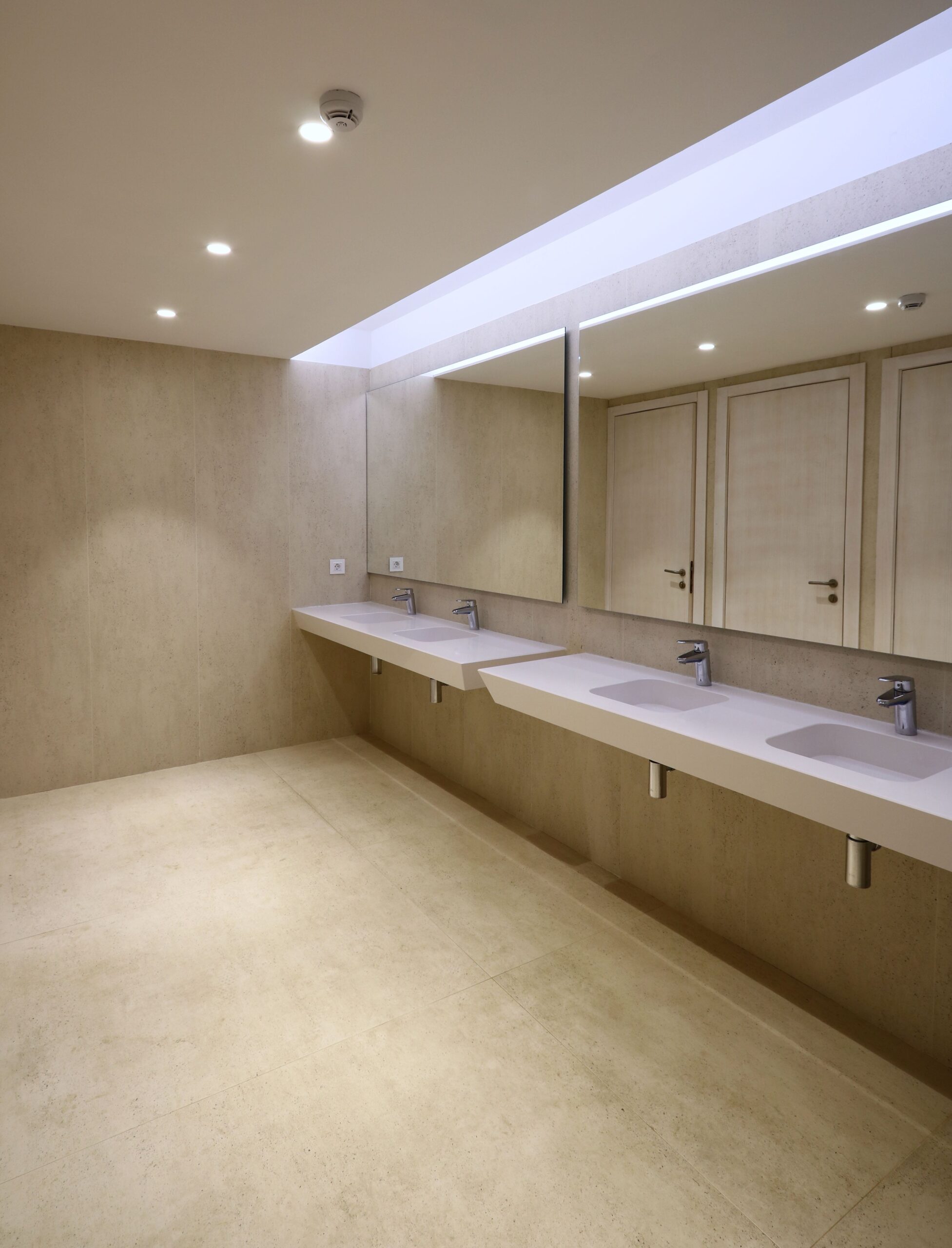
A key hygiene benefit of engineering stone is the ability to use large, seamless slabs in bathroom installations. Fewer joints mean fewer places for bacteria and dirt to accumulate.
Applications include:
- Full-height shower walls
- Integrated vanity tops
- Bathroom wall cladding
- Bathtub surrounds
- Flooring with minimal grout lines
This creates a cleaner environment and a sleek, modern aesthetic.
Heat and UV Resistance for Bathroom Conditions
Engineering stone is highly resistant to heat and UV exposure, which is important for bathrooms that receive natural sunlight through windows or skylights. Surfaces will not discolor or fade over time, even with constant light exposure.
Heat resistance ensures that hot styling tools, steam, and heated towel racks do not damage the surface.
Anti-Slip Finishes for Safety
Bathrooms can be hazardous when floors are wet. Engineering stone offers textured, slip-resistant finishes that increase traction and reduce the risk of falls.
These finishes are ideal for:
- Shower floors
- Wet room installations
- Spa bathrooms
- Pool bath areas
Safety is especially important in family homes, hotels, and senior living facilities.
Easy Maintenance and Long-Term Value
Because engineering stone is non-porous, cleaning is simple and requires only mild detergent and water. There is no need for sealing, polishing, or professional restoration, saving time and money over the life of the bathroom.
Long-term maintenance benefits include:
- Lower cleaning costs
- Fewer repairs
- Longer service lifespan
- Consistent beauty over many year
Engineering stone offers superior lifetime value compared to traditional bathroom surfaces.
Design Flexibility and Luxury Finishes
Engineering stone surfaces come in a wide range of styles and textures, including:
- Natural marble looks
- Polished stone finishes
- Matte concrete effects
- Soft neutral color palettes
These options fit perfectly with luxury bathroom design trends, from minimalist spa aesthetics to contemporary boutique hotel styles.
Conclusion
Hygienic bathroom surfaces made from engineering stone deliver zero-porosity benefits that protect against moisture, stains, and bacteria. With large-format panels, slip-resistant options, and low-maintenance performance, sintered stone brands such as Dekton and Lapitec provide long-term beauty and cleanliness in both residential and commercial bathrooms. For designers, homeowners, and property managers seeking durability, hygiene, and luxury in wet spaces, engineering stone is the ideal solution for modern bathrooms built to last.