Resined marble is natural stone whose fissures and micro-cracks have been filled with resin, usually under vacuum, before polishing; fragile stones are also backed with fibreglass mesh. It is standard practice that lets delicate marbles, onyxes and breccias be cut and installed at all. What matters is which resin was used and where the slab will live.
Turn almost any slab over in a stone yard and the back tells a story the face does not. There may be a fine grid of fibreglass, or a glassy sheen where resin has soaked into a vein. Clients seeing it for the first time sometimes wonder whether they are being sold something less than natural. They are not, and understanding why makes you a better judge of stone.
Why do marble slabs have fissures in the first place?
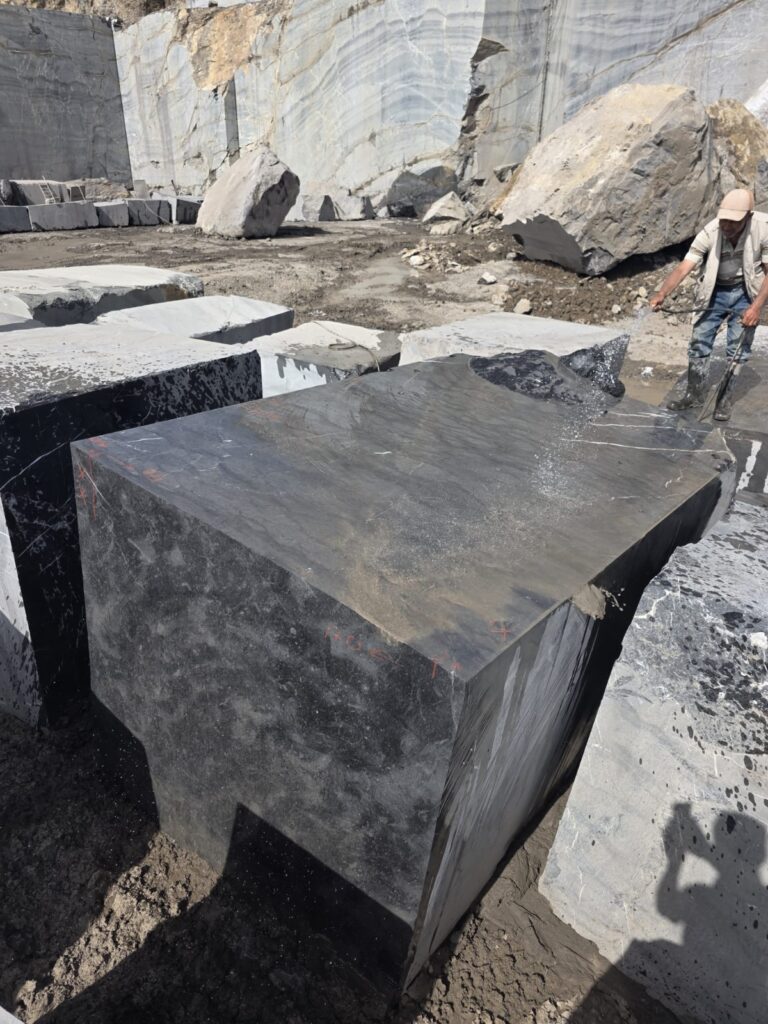
Marble is limestone transformed by heat and pressure deep underground, then folded, lifted and fractured over millions of years. Many of the veins people prize are old fractures that other minerals later filled, which is why a vein is often a line of weakness as well as a line of beauty. Breccias go further: they are literally broken fragments of rock cemented back together by nature.
Quarrying, sawing and handling then open fine cracks of their own. A block that looked sound can yield slabs with hairline fissures, open pores and small voids at the surface. Left untreated, some of those slabs would break during cutting or transport, and many would not take a continuous polish.
How does vacuum resin impregnation work?
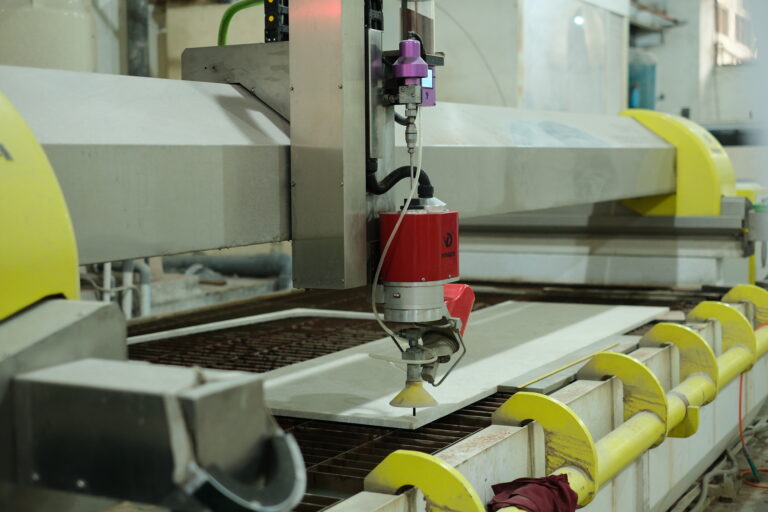
In a typical processing line, the slab is first dried, because moisture in the stone stops resin from bonding. Resin, usually an epoxy or a cheaper polyester, is spread across the face, and the slab passes through a vacuum stage that draws air out of the fissures so the resin is pulled deep inside them. Once the resin has cured, often with gentle heat, the slab is calibrated and polished. Polishing removes the resin from the surface, leaving it only where it has filled cracks and pores.
The resin can be clear or tinted to match the stone, and pits and small holes are filled at the same time. Done well, the result is a slab that is stronger, easier to fabricate and polished to an unbroken surface, with the stone’s own character untouched.
Why are some slabs backed with fibreglass mesh?
Some stones need more than filled cracks. Onyx, breccias, heavily veined marbles and some quartzites are fragile enough that a slab can come apart along its natural seams. For these, a fibreglass mesh is bonded to the back with resin, holding the slab together through cutting, transport and installation.
Mesh has practical consequences worth knowing. It can show as a faint grid when a translucent stone is lit from behind, so backlit onyx is usually given a clear backing or laminated to glass instead; our onyx backlighting guide explains why. Mesh-backed slabs also need an adhesive that bonds well to the backing, which your installer should confirm.
How does Bended relate to mesh backing?
MM Galleri’s Bended technique, developed in 2016, takes the same idea much further. Stone is sliced to sheets as thin as 2mm and paired with fibreglass, so the backing becomes part of the structure rather than a safety net. The result is 60% lighter than solid marble, patented in Southeast Asia, and able to curve into columns, walls and furniture. The Bended marble technology page shows how far that principle can go.
Does the resin in marble turn yellow?
It depends on the resin. Polyester resin, the cheaper and faster-curing choice, is the one known for yellowing. Over months and years, light and air turn it amber, and on a white marble the filled fissures slowly surface as yellow lines across the stone. High-grade non-polyester resins cost more and take longer to cure, but they hold their clarity, so the fills stay the colour of the stone.
The difference shows most on white and light marbles, beside large sunny windows and in strong tropical light. So the useful question about a resined slab is not whether it has resin, but which resin. Heat is a separate concern: resin is softer than stone at high temperatures, so a resined surface beside a cooktop still needs a trivet under every hot pan.
Which resin does MM Galleri use?
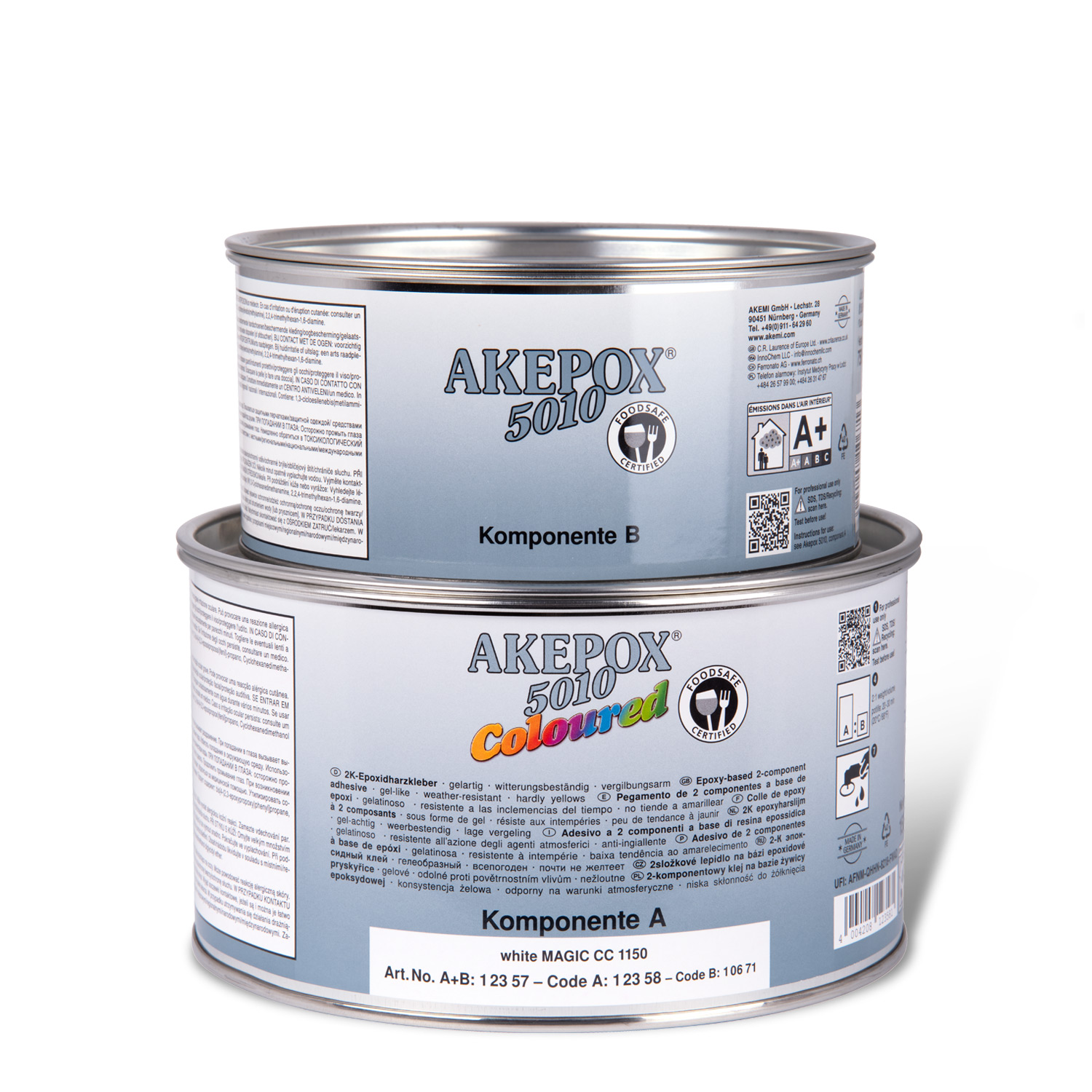
In its Surabaya factory, MM Galleri treats stone with high-grade resins imported from AKEMI in Germany and MEGAPOXY in Australia. Both are non-polyester resins, chosen over the cheaper polyester common in the trade for one reason: they do not yellow over time. The most valuable stones in the collection are always refinished and re-resined in the factory, whatever treatment they arrived with, so a white marble keeps clear fills for years and the look it had on the day it was polished.
Some slabs arrive already resined by the quarries that cut them. For those, MM Galleri works with processors that use higher-grade resin wherever possible and steers clear of polyester.
The same care follows the resin after use. Resin waste from the factory is recycled, just as stone dust is turned into fertiliser for reforestation.
How can you tell if a marble slab is resined or meshed?
Most signs of resined marble are visible if you know where to look.
- Turn it over. A mesh backing is obvious at once, as a woven grid bonded to the underside. A resined back has a glassy, sometimes amber sheen.
- Look across the face in raking light. Filled fissures often have a slightly different gloss from the crystal around them, a little glassier or smoother.
- Check the finish. On honed and leathered slabs, resin lines tend to look shinier than the surrounding stone, because resin takes a finish differently.
- Look at the cut edge. A fresh edge shows resin in the fissures and the mesh layer at the back.
- Ask. A reputable supplier will tell you exactly how a slab has been treated.
Is resined marble a defect?
No. Resining is standard across the stone trade, and without it many of the most admired marbles, onyxes and breccias could not be cut, shipped or polished at all. An unresined slab is not necessarily purer; it may simply be a sounder stone, or an unreinforced one.
What deserves scrutiny is how the treatment has been used. A crack running right through a slab is still a crack after it has been filled, and it should be discussed before the slab is cut. Poor colour matching, a resin film that wears through on the surface and a polyester fill that yellows with age are the real problems, and each has a clear question that uncovers it.
Resined marble treatments compared
| Treatment | What it does | Typical stones | How to spot it | What to ask |
|---|---|---|---|---|
| Face resin (vacuum impregnation) | Fills fissures and pores for strength and a continuous polish | Most commercial marbles, onyx, breccias | Filled lines with a slightly different gloss | Which resin? Polyester or non-polyester? |
| Back resin | Consolidates the slab from behind | Fissured marbles, quartzites | Glassy or amber sheen on the back | Is any crack continuous through the slab? |
| Fibreglass mesh backing | Holds fragile slabs together | Onyx, breccias, heavily veined stones | Woven grid on the back | Will it affect backlighting or adhesion? |
| Tinted pit and hole fill | Fills voids and small holes | Travertine, porous marbles | Small matched spots on the face | Is the fill resin or cement, and colour-matched? |
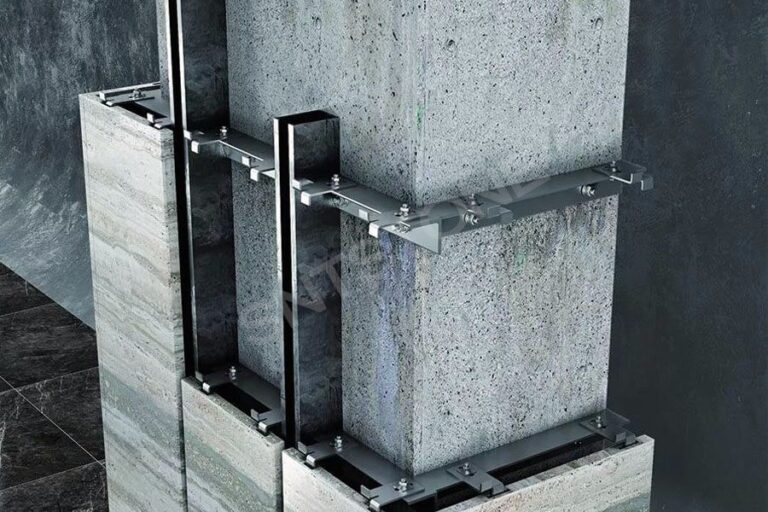
| Structural thin-stone backing | Lets a thin sheet of stone rely on its backing for strength | Bended sheets, laminated panels | Stone bonded to a visible substrate | What is the backing, and where can it be used? |
Frequently asked questions
Is resined marble lower quality than unresined marble?
Not in itself. Resin is used on most commercial marble to fill natural fissures and give a continuous polish, and it often makes a slab stronger and easier to fabricate. Quality depends on the stone, the resin and how well the work was done. A sound slab lightly resined is a better buy than a fragile one left untreated.
Can resined marble be used outdoors?
It can, with care. Strong tropical sun is hard on any resin, and cheap polyester fills yellow fastest, which shows most on light-coloured stone. For exterior use, choose a slab treated with a high-grade non-polyester resin, such as the AKEMI and MEGAPOXY resins MM Galleri uses, or a stone that needs little resin. Your supplier should be able to say which resin a slab has been treated with.
Does resin change how marble should be cleaned?
Only slightly. The same gentle routine suits both: a soft cloth and a pH-neutral cleaner, with no acids or abrasives. Avoid strong solvents, which can soften some resins, and keep hot pans off the surface, since resin is more heat-sensitive than stone. Sealers are still worthwhile on the stone around the filled areas.
Can a worn or yellowed resin fill be repaired?
Often, yes. A stone specialist can usually grind out a discoloured or worn fill, replace it with fresh, colour-matched resin and polish the area back to the surrounding finish. Large areas of yellowing across a whole surface are harder to correct, which is why a non-polyester resin matters from the start.
Resin and mesh are not the stone’s disguise but its quiet support, the reason the most fragile and beautiful slabs can travel from quarry to room intact; knowing how they were used is simply part of knowing the stone.