Onyx backlighting 101: how to design a glowing stone feature wall
Onyx backlighting works because the stone itself lets light through. Cut thin enough — typically as an 8mm laminated panel — its crystalline bands, opaque on the quarry floor, begin to glow once a light source sits behind them. Marble and granite stay solid under the same light; onyx alone turns luminous, which is why it has become stone’s answer to a wall that seems to breathe.
Why Do Designers Choose Onyx Backlighting Over Other Stones?
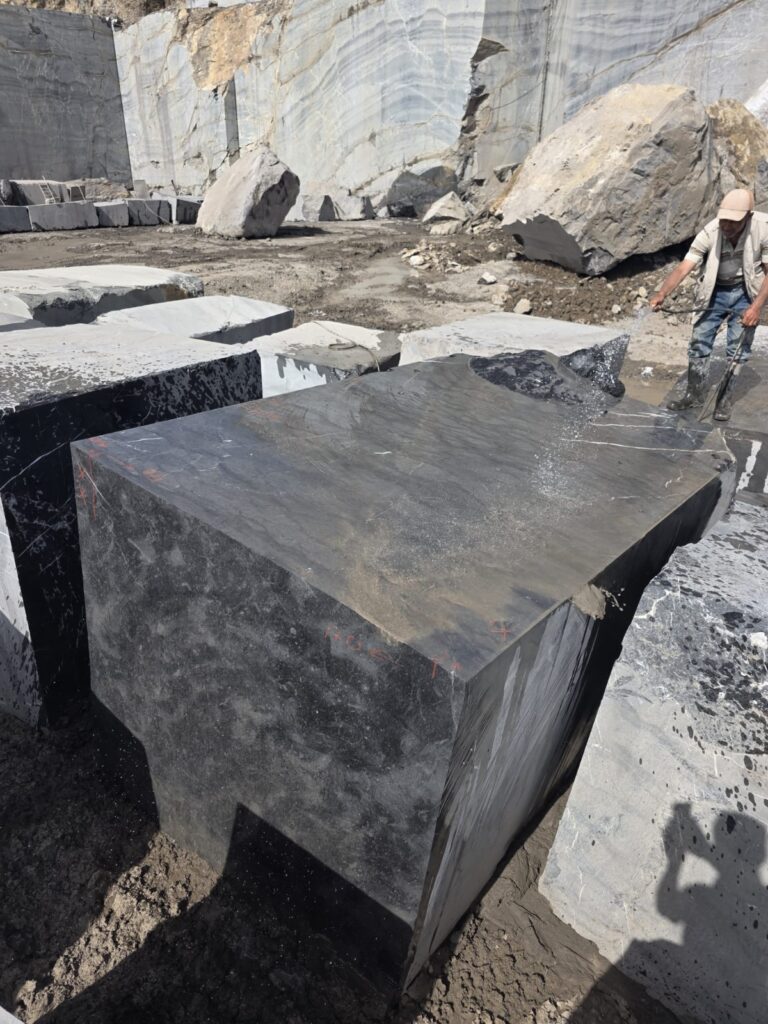
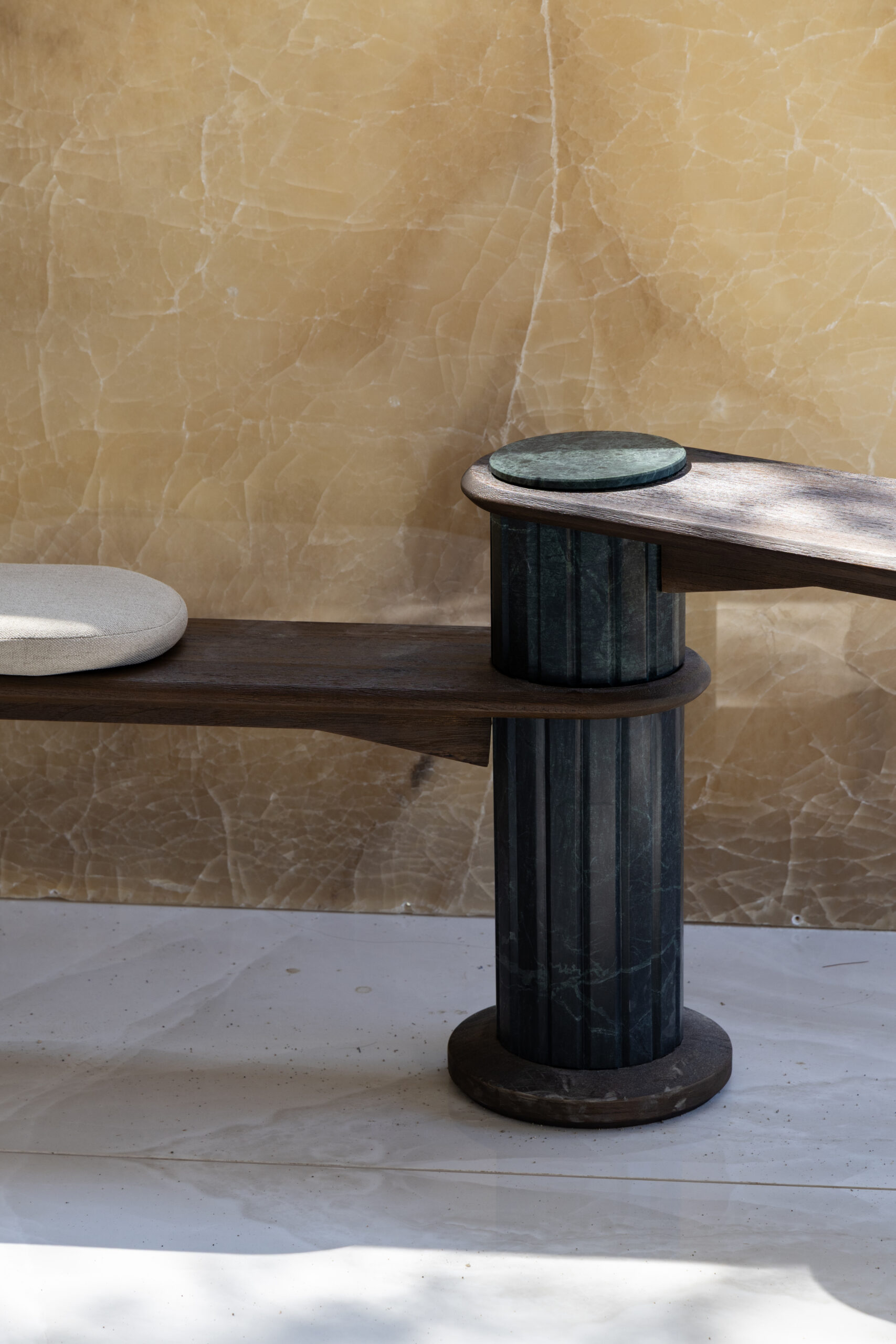
Every natural stone has a story written in mineral and pressure, but onyx is the rare one that tells it in light. Formed in bands, layer settling over layer inside caves and mineral springs, onyx carries a crystalline structure loose enough to let light travel through it rather than stop at the surface. That is the property — translucency — that marble, granite, and travertine simply do not share in the same degree. A granite countertop will always read as mass; an onyx panel, lit from behind, reads as something closer to amber held up to a window.
This is also why onyx resists being treated as a generic material choice. Each of the 35 onyx varieties MM Galleri carries has its own density of veining, its own color story, its own way of holding light. Choosing onyx backlighting is less like selecting a finish and more like selecting the exact slab that will do the glowing — every one is, in the truest sense, a natural artwork, and no two behave quite the same under a lamp.
How does onyx backlighting actually work?
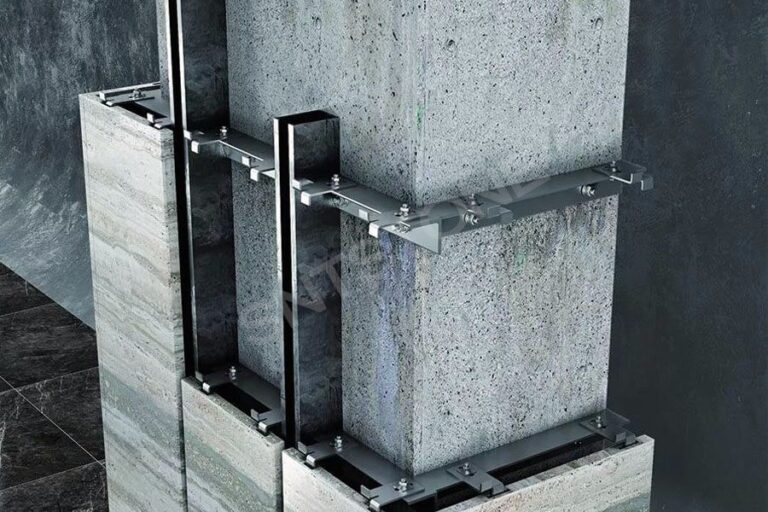
At a design level, onyx backlighting means three things happening in the right order: the stone has to be thin enough to transmit light, it has to be mounted on something that lets that light through or around it, and the light itself has to sit close and even behind the panel.
This is precisely the problem the 8MM technique was built to solve, though it started with marble back in 2002. A slab of onyx is sliced far thinner than it could ever stand on its own, then laminated onto a rigid backing — glass, most often, when the intention is for light to pass through it, since a wood or metal backing would simply block what the stone lets in.
The result is a panel light, stable, and thin enough to glow rather than a slab too dense to do anything but sit there. It is the same logic MM Galleri used to laminate Onyx Ice Age onto the bar and tables at H List in Jakarta — a thin stone skin, backed and reinforced, given a light source behind it.
How thick should an onyx panel be for backlighting?
There is no single number that applies to every slab in onyx backlighting — variety, veining density, and the intensity of the light behind it all change the equation — but the general design principle holds: thinner transmits more evenly. A slab reduced through the 8mm technique lets light diffuse across its whole surface rather than pooling in a few translucent patches, which is usually the difference between a wall that glows and a wall that merely has a light behind it. Left thicker, onyx still admits some light around its palest veins, but the effect turns patchy rather than whole, and the lighting has to work harder to compensate.
The honest answer, at the design stage, is to treat panel thickness as a conversation rather than a spec sheet — one that starts with the specific slab, its color, and the mood the space is after, and ends with a fabrication decision made with that slab in hand. [TK: confirm project-specific thickness recommendations with MM Galleri’s fabrication team before specifying.]
Which onyx varieties glow best?
Because every onyx slab is its own composition, “which variety glows best” is really a question about which glow a project wants. Denser, darker banding tends to hold more contrast when lit — light finds the pale veins and skips past the rest, so the glow arrives as pattern rather than a flat wash. Paler, more evenly toned onyx tends to glow more uniformly, closer to a lit sheet than a lit drawing.
Onyx Ice Age, used at H List, is one proven example: its banding held enough contrast to glow with real drama once lit from below. Onyx Linea, laid across the main floors at 7 Hartley Grove in Singapore, shows the opposite instinct — a soft, linear veining suited to a calmer luminosity rather than a dramatic one. And Onyx Africa, used as the bathroom statement at YD House with its caramel, honey, and ivory veining, is a reminder that warmth and glow are not mutually exclusive; onyx backlighting can be gentle as easily as it can be theatrical.
What kind of lighting goes behind an onyx wall?
At the design level, the goal behind an onyx panel is diffusion, not a spotlight. LED panel or strip lighting, distributed evenly across the back of the stone rather than concentrated at a single point, lets the onyx’s own veining carry the visual interest instead of competing with a hot spot the eye keeps returning to. An air gap between the light source and the panel — enough for the light to spread before it meets the stone — helps that diffusion happen naturally rather than through extra diffusing material stacked behind the slab.
Beyond that, the specifics of fixture type, wattage, and electrical integration are a fabrication and lighting-design conversation, not a design-guide one — [TK: confirm exact lighting specification with MM Galleri’s project team for a given installation].
Does color temperature change how onyx looks lit?
Yes, and this is one of the more forgiving parts of onyx backlighting design, because the same slab can be tuned toward two different moods without touching the stone at all. A warmer color temperature draws out the honey, amber, and caramel tones already present in varieties like Onyx Africa, deepening the sense of warmth the veining already carries.
A cooler, whiter light tends to flatten that warmth and push the stone toward a more clinical, almost icy glow — closer to the mood Onyx Ice Age suggests by name alone. Neither is more correct; the decision belongs to the atmosphere the room is reaching for, whether that is the cinematic warmth of a bar or the cooler restraint of a gallery-like space.
Does vein direction affect the glow pattern?
It does, and this is where onyx backlighting stops being a lighting decision and becomes a stone-selection one. Because onyx forms in bands, the orientation of those bands relative to the light source changes how the glow reads across the panel — veins running horizontally will catch and channel light differently than veins running vertically or diagonally, and a slab rotated ninety degrees before installation can produce a visibly different result even though the material is identical.
This is part of why choosing and orienting the exact slab for a backlit application is treated as a design decision at MM Galleri, not something resolved after the fact. Vein-matching across a run of panels — a discipline already refined through projects like the Stella Cream installation at ION Orchard — carries directly into backlit work, where mismatched veining is even harder to disguise once the light is on.
Onyx Backlighting Compared With Other Stones
| Stone | Translucency | Suitable for backlighting? | Where it’s better used |
|---|---|---|---|
| Onyx | High — light travels through its banded, crystalline structure | Yes — this is its signature application | Feature walls, bar fronts, table tops, backlit panels |
| Marble | Low to moderate, depending on variety and thickness | Occasionally, for a soft ambient glow rather than dramatic veining | Wall cladding, flooring, countertops where mass and veining matter more than glow |
| Travertine | Low — its porous structure scatters light rather than transmitting it | Rarely | Flooring, outdoor cladding, textured wall applications |
| Granite | Essentially opaque | No | Countertops, flooring, and any application where durability matters more than light |
| Quartz (engineered) | Low to none, depending on resin and pigment | No | Countertops and surfaces prioritizing consistency and stain resistance over glow |
A proof point: H List, Jakarta
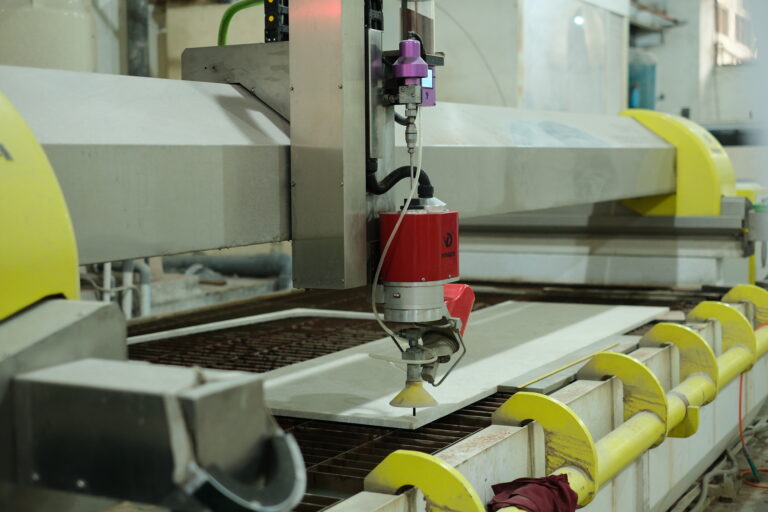
H List, tucked into Jakarta’s SCBD, is built on mood — a nightlife venue conceived as moody, sculptural, and cinematic, where geometry does as much talking as any single material. At its bar and tables, Onyx Ice Age was laminated using the 8mm technique and lit from below, so the surfaces the crowd leans on at midnight are also the surfaces doing the glowing. The complex geometric forms the design called for were fully prefabricated in MM Galleri’s Surabaya factory, cut and finished with precision before ever leaving for Jakarta, where they came together in seamless, on-site assembly.
Together, the thinness of the 8mm technique, the translucency of Onyx Ice Age, and the discipline of factory-level prefabrication are what let H List turn a bar top into something closer to a lit sculpture — MM Galleri’s clearest proof that onyx backlighting is not a lighting trick layered onto stone, but a decision made about the stone from the very start.
Backlighting depends entirely on the 8MM lamination technique described above — without it, onyx would be too thick to glow evenly. For a broader technical primer on lighting translucent stone beyond MM Galleri’s own approach, see Evo-Lite’s guide to backlighting onyx.
Frequently asked questions
Is onyx really translucent enough to backlight?
Yes. Onyx is unusual among natural stones because light travels through its structure instead of stopping at the surface. That translucency is what separates onyx from marble, granite, and travertine, and it is the reason onyx backlighting reads as luminous rather than simply illuminated from the front.
How Thick Should an Onyx Backlighting Panel Be?
Thinner is generally better for even glow, which is why onyx destined for backlighting is often laminated using the 8mm technique rather than left as a solid slab. A thin, laminated panel on a light-permitting backing lets light travel through evenly, while a thicker slab dims the effect and asks more of the lighting behind it.
What kind of lighting goes behind an onyx panel?
Flat LED panel or strip lighting, distributed evenly across the back of the stone, is the common approach — the goal is diffusion, not a single hot spot. An even field of light lets the onyx’s own veining do the work, rather than the fixture itself becoming the visible feature.
Does the direction of onyx veining affect the glow?
Yes. Vein-heavy bands often glow differently from the calmer background of the slab, so the same panel can look markedly different depending on how it is oriented and cut. Choosing and orienting an onyx slab for backlighting is treated as a design decision, not an afterthought.
Which onyx varieties glow most dramatically?
MM Galleri carries 35 onyx varieties, each with its own density of veining and color, so the honest answer is to view slabs in person and, where possible, see them lit. Onyx Ice Age, used in the backlit bar and tables at H List in Jakarta, is a proven example of how one variety glows under real conditions.
Can backlit onyx panels be prefabricated off-site?
Yes, and it is often the more precise route. At H List, the onyx panels were fully prefabricated in MM Galleri’s Surabaya factory, with complex geometric forms cut and finished before the pieces reached the Jakarta site, where they came together in seamless, on-site assembly.