
Sustainable natural stone starts with what happens to what’s left over. At MM Galleri, stone dust and off-cuts from cutting and polishing are processed in-house into natural fertilizer for reforestation, rather than trucked to a landfill — one part of a sustainability program built over 33 years in Surabaya.
Why does stone fabrication produce waste in the first place?
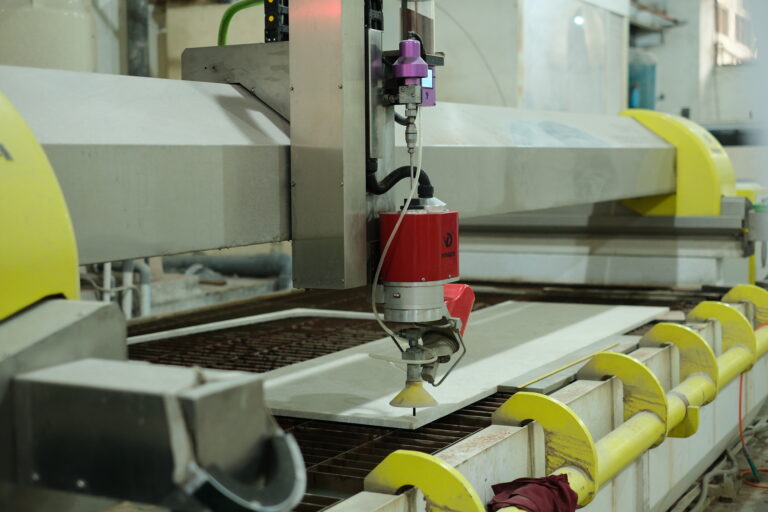
No slab arrives at its final shape without leaving something behind. Cutting a block down to size, polishing a surface to the finish a client has chosen, honing an edge until it reads as intentional rather than raw — each step removes material, and that material has to go somewhere. The byproduct is mostly fine mineral dust, along with smaller off-cuts too irregular to use on the next project.
For most of the industry’s history, that dust has simply been discarded — swept up, hauled away, forgotten. It is an old habit, and an understandable one: stone dust is heavy, it accumulates fast in a working factory, and dealing with it properly takes infrastructure most fabricators never build. MM Galleri built that infrastructure instead of working around it.
What happens to the dust inside MM Galleri’s factory?
This is where sustainable natural stone gets its proof: stone dust generated in the Surabaya factory is directed into an in-house recycling treatment center, where it is processed into natural fertilizer intended for reforestation. Rather than closing the loop at “removed,” the material is given a second use — returning something of the quarry back to the ground, in a form a forest can actually use.
It is a quiet kind of correction. The mineral content that gives marble and granite their density and character doesn’t disappear once a slab is cut — it is simply redirected, from a factory floor to soil that needs rebuilding. A material that took millions of years to form under pressure gets one more job before its story with MM Galleri ends.
Why fertilizer, and why reforestation?
The choice says something about how MM Galleri thinks about the relationship between the quarry and the forest around it. Quarrying disturbs land. Reforestation is one of the more direct ways to answer that disturbance — and stone dust, rich in the mineral compounds that support soil health, is a genuinely useful input for it rather than a token gesture. Treating a byproduct as a resource, instead of a cost to dispose of, is the same instinct that runs through the rest of the program described below.
What are MM Galleri’s other sustainability initiatives?
Sustainable natural stone at MM Galleri is more than the fertilizer program alone: it sits alongside four other commitments that run quietly through daily production in Surabaya.
Advanced water recycling. Cutting and polishing stone uses large volumes of water — to cool blades, to control dust, to keep the process safe. MM Galleri recycles water through the production process rather than drawing fresh supply and discharging used water each time, reducing the factory’s draw on local water resources.
Energy-efficient production systems. The machinery that cuts, polishes, and finishes stone at scale runs on energy-efficient systems designed to do the same work with a lighter load — a quieter form of sustainability, felt in reduced consumption rather than announced in a headline.
Resin waste recycling. Some finishing and fabrication processes involve resins, and like stone dust, resin waste is recycled rather than discarded — extending the same principle of use to a different material stream.
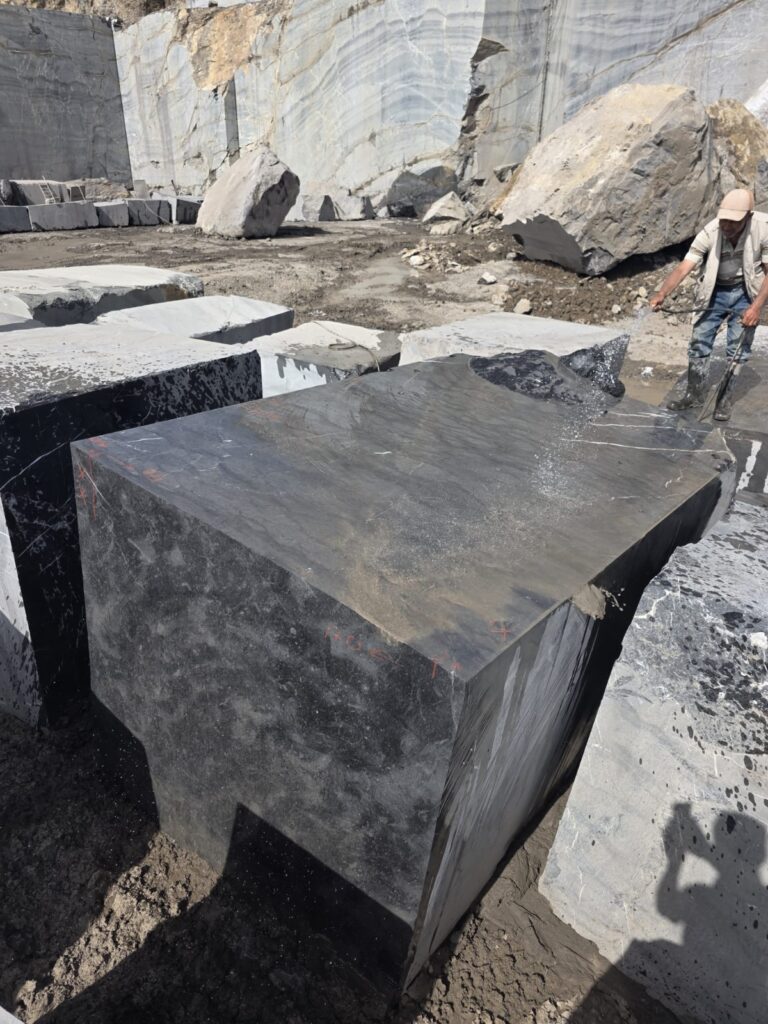
Eco-efficient quarry machinery. Upstream, at the quarrying stage, eco-efficient machinery reduces reliance on fossil fuel — meaning the sustainability commitment doesn’t start at the factory door in Surabaya. It reaches back to where the stone is first taken from the earth.
The five initiatives at a glance
| Initiative | What it addresses | Where in the process |
|---|---|---|
| Stone dust into fertilizer | Dust and off-cuts left by cutting and polishing | In-house recycling treatment centre, Surabaya |
| Advanced water recycling | Water used to cool blades and control dust | Production process, Surabaya |
| Energy-efficient production systems | The energy load of cutting, polishing and finishing | Factory machinery, Surabaya |
| Resin waste recycling | Resin left over from finishing and fabrication | Finishing and fabrication |
| Eco-efficient quarry machinery | Reliance on fossil fuel before stone reaches the factory | Quarrying stage, upstream |
That combination is what sustainable natural stone looks like in practice at MM Galleri: together, these five initiatives have earned MM Galleri national recognition for eco-friendly innovation — not a single certification claimed for marketing’s sake, but a pattern of decisions, repeated for over three decades, that the industry has noticed.
Sustainable Natural Stone: Is It Actually Sustainable?
This is a fair question, and an honest answer resists a simple yes or no. Natural stone is quarried, not manufactured — it carries an extraction cost that no amount of good process erases entirely. What can be said honestly is this: stone quarried once and fabricated well outlasts almost every other building material, often by generations, which means its environmental cost is amortized across a very long life rather than a short replacement cycle. And how that fabrication happens — whether the waste it generates is discarded or returned to use — is squarely within a company’s control. That is the piece MM Galleri has chosen to take seriously.
Why does this matter more now than it used to?
The materials industry is paying closer attention to origin stories and longevity than it has in years past — not as a trend to chase, but as a genuine counterweight to a culture of disposable materials that are replaced, not repaired, every few years. A stone floor installed with care can outlive the building around it being renovated twice over.
That kind of longevity is itself a form of sustainability, and it is one reason buyers, designers, and architects are asking harder questions about where a stone comes from and what happens to what’s cut away from it — exactly the standard sustainable natural stone sourcing is being held to. MM Galleri has been answering parts of that question inside its own factory for longer than the question has been fashionable to ask.
The same discipline that turns cutting waste into fertilizer also shapes how MM Galleri approaches naturally high-waste work like carving a monolithic stone table from a single block. For broader industry context on responsible quarrying and fabrication, see the Natural Stone Institute’s guide to responsible manufacturing.
Frequently asked questions
Is Sustainable Natural Stone Actually Eco-Friendly?
Natural stone is quarried, which carries a real extraction footprint, but its exceptional lifespan spreads that footprint across generations rather than a short replacement cycle. How a fabricator handles waste from cutting and polishing — recycling it or discarding it — meaningfully changes the material’s overall sustainability, which is the piece MM Galleri has invested in directly.
What does MM Galleri do with stone dust?
Stone dust generated during cutting and polishing is processed in an in-house recycling treatment center in Surabaya and turned into natural fertilizer used for reforestation, rather than sent to landfill as industry waste has traditionally been.
Does MM Galleri recycle water in production?
Yes. MM Galleri uses advanced water recycling in its fabrication process, reducing the amount of fresh water drawn for cutting and polishing and lowering the volume of water that would otherwise need to be discharged after use.
Is MM Galleri’s sustainability program certified or recognized?
MM Galleri has been nationally recognized for eco-friendly innovation.
What happens to resin waste from stone fabrication?
Resin used in certain finishing and fabrication processes is recycled rather than discarded, applying the same waste-to-resource principle used for stone dust to a different material stream in the same factory.
Does sustainable sourcing affect how quarrying is done?
Yes. Beyond the factory, MM Galleri’s quarrying operations use eco-efficient machinery designed to reduce reliance on fossil fuel, extending the sustainability commitment back to where the stone is first extracted, not just where it is finished.
Sustainable natural stone, in the end, is not a marketing claim — it is a discipline. Thirty-three years in, the measure of a stone house isn’t only what it sells — it is what it does with what’s left over once the slab is cut. A workshop that turns dust into fertilizer, and water and resin back into use, is making a quiet argument: that stone, treated with the right discipline, can be both a beautiful material and a responsible one, and that those two things were never meant to be in tension.