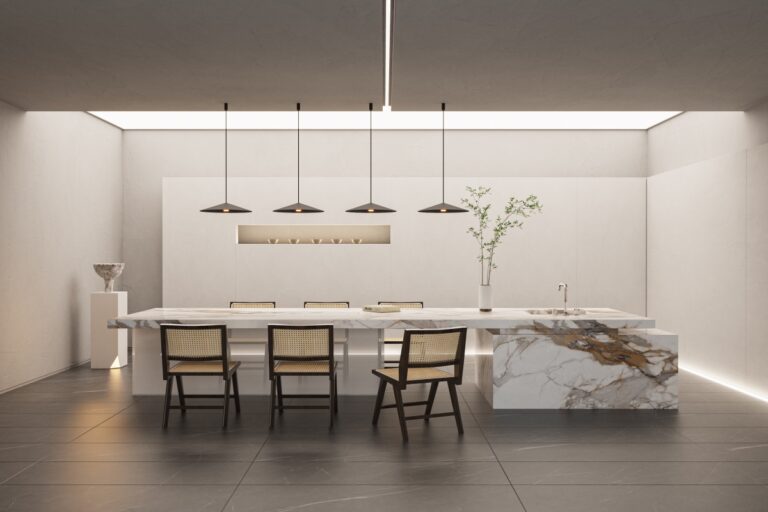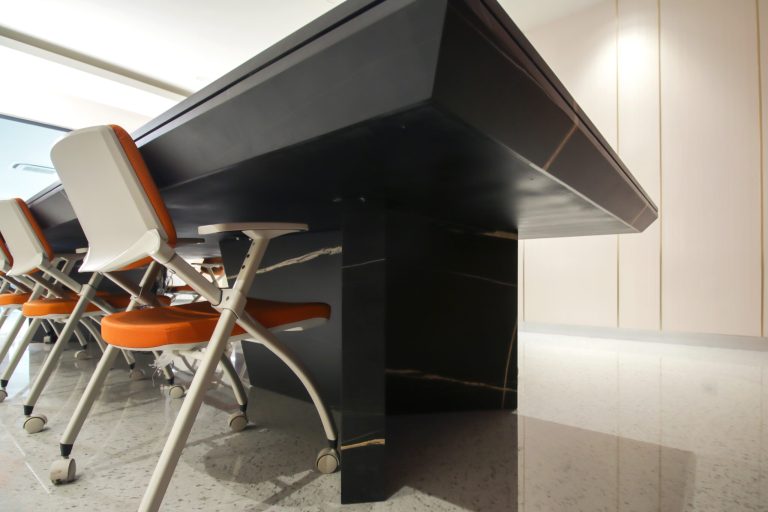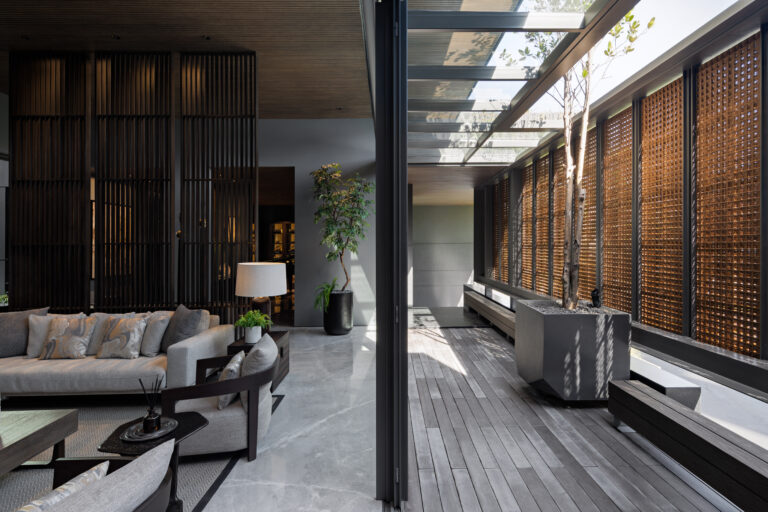
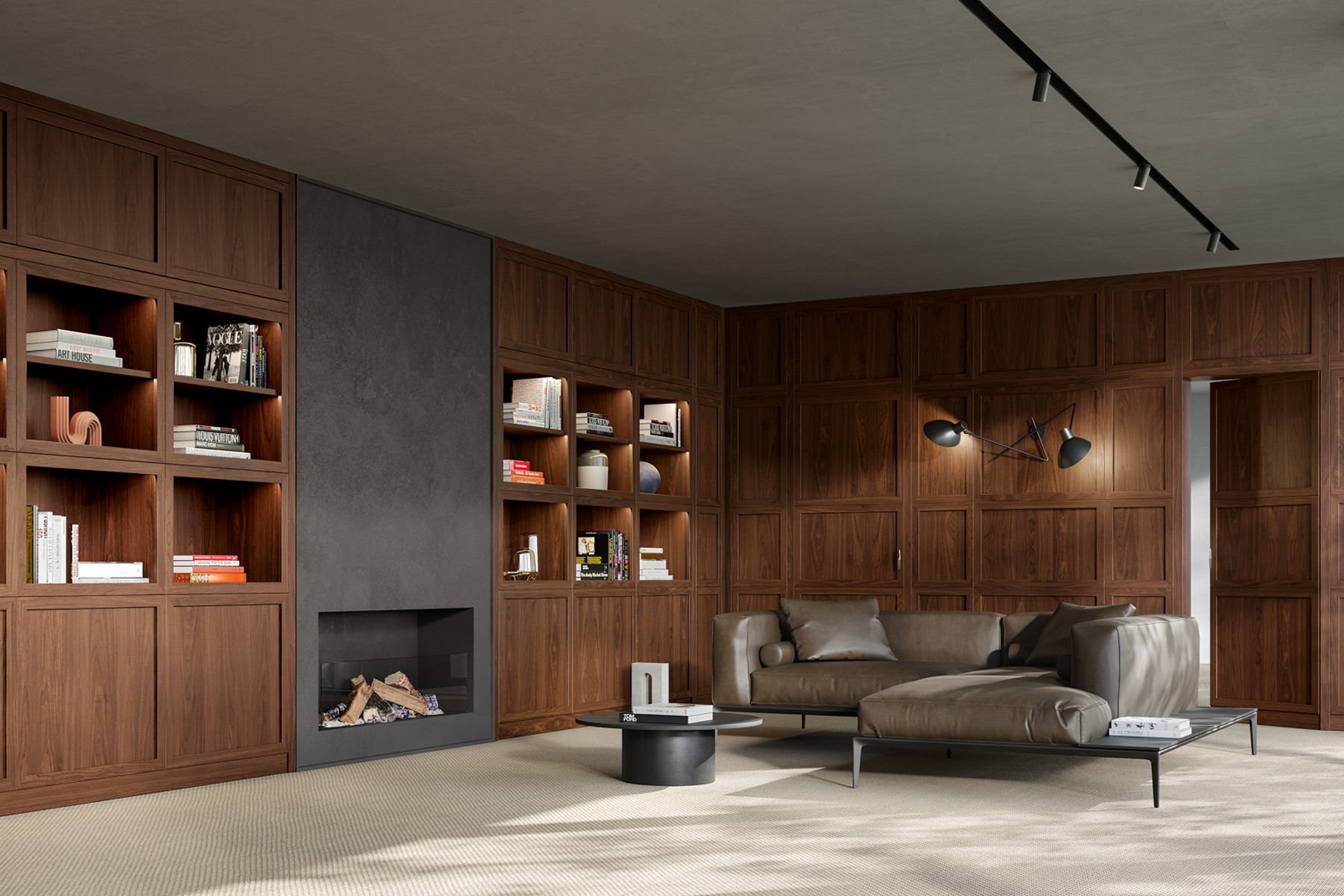
The future of engineered stone is being shaped by regulators and designers at once. Makers are cutting crystalline silica and, in some surfaces, removing resin altogether, since Australia banned high-silica engineered stone and other places weigh their own rules. Meanwhile surfaces are growing deeper: veining through the body, semi-translucent slabs and larger formats.
For thirty years the pitch for engineered stone was simple: the look of marble, the predictability of a factory. That pitch has not disappeared, but it is no longer enough. What a slab is made of, and what happens when it is cut, now matters as much as how it looks.
Why is engineered stone changing so fast?
Because of dust. Cutting, grinding and polishing many engineered surfaces releases respirable crystalline silica, fine enough to reach deep into the lungs. Breathing it in over time can cause silicosis, an incurable lung disease. The cases among fabrication workers, many of them young, are what turned a material question into a political one.
Australia moved first. From 1 July 2024 it banned the use, supply and manufacture of engineered stone benchtops, panels and slabs, and from 1 January 2025 their import. In Britain, the Health and Safety Executive published its first guidance sheet for engineered stone in May 2026 and began more than 1,000 inspections of fabricators.
California’s safety board voted in May 2026 to begin rulemaking that could prohibit fabricating engineered stone above 1% crystalline silica.
Every maker selling into those markets has had to answer the same question: how much silica is in your slab?
How low can silica go?
Lower than anyone expected a decade ago. The figures below are each maker’s own published statements, not independent tests, and they apply to the ranges named.
| Surface | Crystalline silica, as stated by its maker |
|---|---|
| Silestone with Hybriq+ (Cosentino) | Less than 40% across the range, certified by SGS Australia in 2023 |
| Silestone XM (Cosentino) | A maximum of 10% |
| Caesarstone ICON | Less than 1%, verified by XRD testing |
| Dekton (Cosentino) | 5 to 11%, according to its safety data sheet |
| Lapitec | Free of crystalline silica since 2022, according to Lapitec |
Cosentino also previewed, in 2025, what it calls its first zero-silica surface. The direction is clear. A material that was once sold on its quartz content is now being redesigned to need as little of it as possible.
Does resin-free mean silica-free?
No, and this is the most common confusion we hear.
Most engineered quartz surfaces are crushed mineral held together by resin. Sintered and porcelain surfaces are fused mainly by heat, and many contain no resin. Australia’s rules reflect the difference: sintered stone and porcelain products are excluded from the ban, but only if they contain no resin.
Resin-free does not settle the silica question, though. Dekton contains no resin in its listed composition, yet Cosentino’s own safety data sheet puts its crystalline silica at 5 to 11%. Lapitec, by contrast, states that its slabs contain neither resin nor crystalline silica. Two resin-free surfaces, two very different answers.
Even under the Australian ban, regulators say that processing excluded products still has to be controlled. The lesson for anyone specifying a surface is simple: ask about resin and ask about silica, separately.
Does low silica make fabrication safe?
Not on its own, and the makers say so themselves. Caesarstone, for example, tells fabricators that ICON’s low silica level does not change the safety measures required when cutting it.
The controls that matter are old and unglamorous. Britain’s Health and Safety Executive says dry cutting of engineered stone should not happen.
The regulator adds that its research found dry fabrication typically produces five to ten times more respirable crystalline silica than wet methods using equivalent tools. Water at the blade, dust extraction, suitable respiratory protection and health checks for workers do more than any single change in a recipe.
Our view is that the future belongs to the whole chain, not to one ingredient. A low-silica slab cut dry is still a dust problem. The slab and the workshop have to be right together.
Will the inside of the slab matter more?
Yes. The second change is aesthetic, and it is just as important to designers.
For years many engineered surfaces carried their design on the face. Look at the edge and you saw a plain body of another colour. That worked for flat tops with thin, square edges. It fails on a mitred corner, a thick island end or any detail where the thickness shows.
Full body surfaces answer that. In 2019 Lapitec presented what it described as the world’s first slabs of its kind with veining running all the way through. Others have followed.
SINISO, the newest surface in our collection, is sintered stone. Its Full Body colours carry colour and veining from the face to the back. Cut, mitre or round the edge, and the stone carries on. It contains no resin and no crystalline silica.
Natural stone has always been this way. A vein in marble is a seam of mineral running through the block. Engineered surfaces are now catching up with the standard the earth set.
Will engineered stone let light through?
It has begun to. For centuries, designers who wanted stone that glows have reached for onyx, a natural stone that is translucent in thin slabs.
The Luxury colours of SINISO’s Full Body collection, whose body the factory calls Translucent Full Body, are semi-translucent at a full 12 mm. Most translucent sintered stones must be cut down to 3–6 mm first. Light placed behind a panel passes into it and makes it glow, while objects behind stay hidden. Two of the four Onyx designs are semi-translucent too; the rest of the SINISO range is not.
We expect light to become one of the main ways designers use engineered surfaces in the next decade, alongside the natural onyx it will never fully replace.
Are slabs getting larger?
They are. Large formats have become normal across engineered surfaces. SINISO slabs, for example, measure 1600 × 3200 × 12 mm. A larger sheet means fewer joints on a wall or an island and more freedom in where those joints fall.
Large formats also ask more of everyone who handles them: the route into the building, the lift, the stair, the people carrying the slab. The future of engineered stone is partly a logistics question, and it is best answered at the drawing stage.
What should designers ask for now?
Five questions will tell you most of what you need to know about any engineered surface, old or new.
- Silica. What is the crystalline silica content? Ask for the safety data sheet, and read the figure for the exact range you are specifying.
- Resin. Does it contain any? In Australia this decides whether a product falls under the ban.
- Body. Is it full body? Look at the edge of a real sample, not a photograph of the face.
- Light. How does it behave when lit from behind? If the design relies on light, see a lit sample.
- Fabrication. Who cuts it, and how? Wet cutting and dust control are not optional extras.
Where does natural stone fit in this future?
Natural stone is not outside the silica story. Granite and quartzite contain crystalline silica naturally, and dust from any stone has to be controlled. Marble contains far less, but the same discipline applies in any workshop.
MM Galleri has cut natural stone in its own workshops in Surabaya since 1992. The stone dust from cutting and polishing is processed in-house into natural fertilizer for reforestation, which we describe in our piece on what happens to our stone dust.
Alongside more than 400 types of marble we carry engineered surfaces including Lapitec, Dekton, Silestone, Vicostone and SINISO. If you are weighing two of them, our comparison of Lapitec and Dekton is a good place to start. SINISO has its own page.
Frequently asked questions
What is the future of engineered stone?
Lower silica, less or no resin, and more depth. Regulators in Australia, Britain and California have pushed makers to cut crystalline silica, and some surfaces are now made without resin. At the same time, veining through the body, semi-translucent slabs and large formats are changing what engineered surfaces can look like.
Is engineered stone being banned everywhere?
No. Australia banned engineered stone benchtops, panels and slabs from 1 July 2024 and their import from 1 January 2025. California is working on a rule for products above 1% crystalline silica. Britain has chosen guidance and inspections instead of a ban. Many countries have no specific ban at all.
Is low-silica engineered stone safe to cut?
It reduces one risk, but makers still require full dust controls. Caesarstone says its low-silica ICON range needs the same safety measures as its other surfaces. Britain’s Health and Safety Executive says engineered stone should not be cut dry and recommends water suppression, mist control, respiratory protection and health surveillance.
Is sintered stone the same as low-silica engineered stone?
Not necessarily. Many sintered surfaces contain no resin, and Australia excludes sintered stone from its ban only when it has none. But resin-free is not silica-free: Cosentino’s safety data sheet lists Dekton at 5 to 11% crystalline silica, while Lapitec states its slabs contain none. Check each product’s data sheet.
What does full body mean in engineered stone?
It means the pattern runs through the slab rather than sitting only on the face. On a full body surface, such as SINISO’s Full Body colours, colour and veining run from the face to the back. Edges and corners show the same pattern as the top.
The best engineered surfaces of the next decade will be judged the way good stone always has been: from the face, from the edge, and by the people who cut it.