Lapitec vs Dekton comes down to two routes to the same idea: both are sintered rather than quarried. Lapitec is full-body sintered stone, resistant to heat, UV, and stains, and built to move between indoor and outdoor settings without changing character. Dekton is ultra-compact and particle-sintered, prized for scratch, fire, and extreme-weather resistance, with the wider range of colours.
Neither is a “natural stone” in the traditional sense — they are engineered for different jobs. Match the material to where it will actually live; that is the core of the decision in one line.
What is sintered stone, exactly?
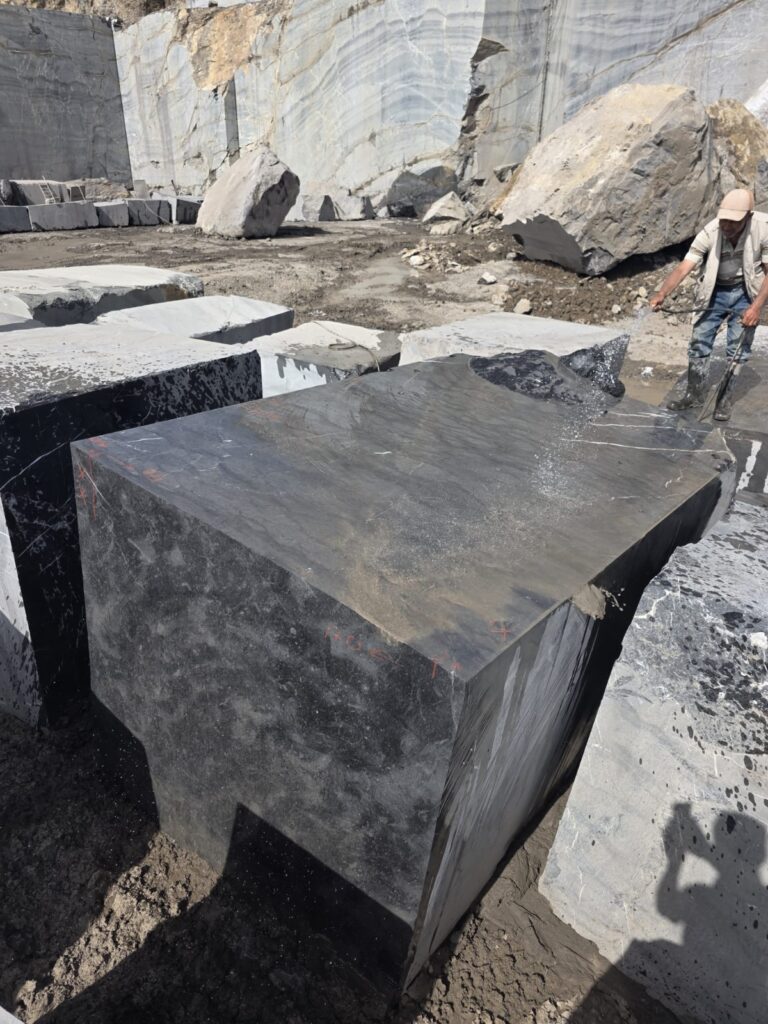
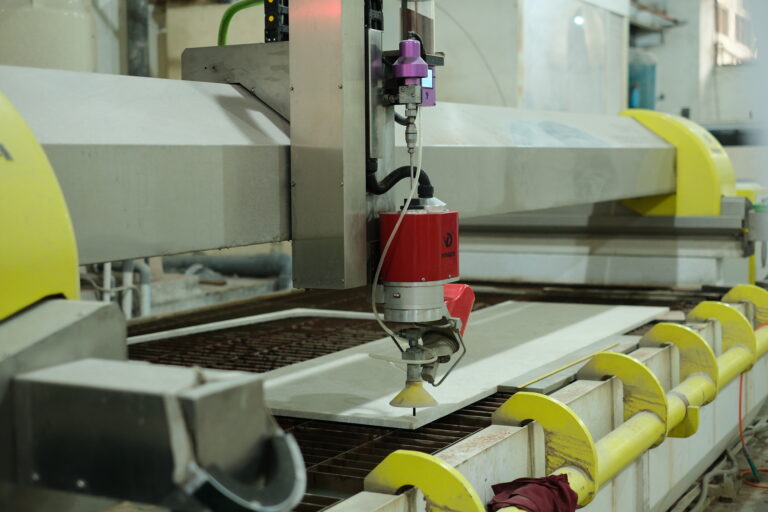
Sintering compresses raw mineral particles under heat and pressure so intense that they fuse into a single, dense mass — no binding resin, no quarrying, no waiting on geological time. Where marble and granite carry the record of centuries underground, sintered stone is made in a matter of hours, engineered from the start for a specific set of demands: sun, rain, foot traffic, spilled wine, a hot pan set down without a trivet.
This is why sintered stone has become the material of choice for surfaces that natural stone was never quite built for — kitchen islands that double as outdoor grilling counters, façade cladding that faces the weather every day of the year, floors that see hundreds of footsteps before lunch. MM Galleri carries two sintered stones with genuinely different personalities: Lapitec and Dekton. Knowing how each is made is the real starting point for the Lapitec vs Dekton decision, and explains why one might suit your pool deck and the other your kitchen floor.
How Lapitec is made — and what makes it different
Lapitec is full-body sintered, meaning the same composition and color run through the entire thickness of the slab, not just a surface layer. Cut it, chip it, or drill into it, and what you find inside matches what you see on top. That full-body consistency is also what gives Lapitec its resistance to heat, UV, and staining — there is no coating to wear through, only stone-like material all the way down.
That combination of properties is precisely what makes Lapitec comfortable moving between indoor and outdoor use. A Lapitec surface installed on a shaded terrace and one installed in the kitchen behind it are drawing on the same underlying resistance to sun and heat, which is part of why MM Galleri specified Lapitec Grigio Cemento for the main interior floors at YD House — a project built on contemporary calm and sculptural precision, where the cement-like tonality of Lapitec sits quietly beside Pietra Serena Sierra outdoors and Onyx Africa in the bathroom.
How Dekton is made — and what makes it different
Dekton takes a different route to the same broad category. It is ultra-compact and particle-sintered, built from a mixture of the same raw materials used in glass, porcelain, and quartz surfaces, compacted to a density that gives it its standout resistance to scratches, fire, and extreme weather. Where Lapitec’s story is one of full-body consistency, Dekton’s is one of compaction — particles pressed so tightly together that the result resists the kind of everyday abuse a busy kitchen or an exposed façade delivers over years, not months.
That manufacturing approach also opens up a wider range of colors and textures than Lapitec offers, which is why Dekton tends to appear where a designer wants a specific graphic or tonal effect — a bold façade panel, a countertop that reads more like poured concrete or brushed metal than stone.
Lapitec vs Dekton at a glance
| Feature | Lapitec | Dekton |
|---|---|---|
| Composition | Full-body sintered stone — consistent through the entire slab | Ultra-compact, particle-sintered surface |
| Heat resistance | Resists heat | Resists fire and extreme heat exposure |
| UV resistance | Resists UV — stable color outdoors | Built for extreme weather exposure |
| Stain resistance | Resists stains | Not published as a comparative figure |
| Scratch resistance | Not published as a comparative figure | Resists scratches |
| Weather resistance | Indoor and outdoor use | Resists extreme weather |
| Color and texture range | Narrower, stone-like palette | Wide color and texture range |
| Best suited to | Surfaces that move between indoor and outdoor, where UV and heat stability matter most | Surfaces that take heavy scratching, fire exposure, or need a specific graphic finish |
Where this table says a figure is not published, it means MM Galleri does not hold a verified like-for-like rating for that property. Ask for the manufacturer’s current technical sheet before specifying on that basis alone.
Where does Lapitec perform best?
Lapitec earns its place on surfaces that live in two worlds at once — the covered terrace that opens straight into the kitchen, the pool-deck bar top that gets full sun by afternoon, the threshold where an interior floor continues outside without a visible seam. Its resistance to heat, UV, and staining means the slab that sits under a bright Surabaya sun in the afternoon looks the same as the one just inside the sliding door — exactly the kind of split identity that tips most Lapitec vs Dekton comparisons in Lapitec’s favor.
At YD House, that continuity is part of the point: Lapitec Grigio Cemento holds the interior floors steady while Pietra Serena Sierra takes the outdoor spaces, two materials reading as one restrained language of grey.
Where does Dekton perform best?
Dekton earns its keep where the surface has to survive things Lapitec was never specifically asked to survive at the same intensity — a wok lifted straight off a flame, years of knives and grit on a countertop, a façade that takes wind-driven rain and temperature swings without complaint. Its fire and extreme-weather resistance make it a natural fit for outdoor kitchen counters positioned near open flame, and its wider color and texture range gives designers more room to specify a look that departs from traditional stone altogether. That combination is usually what tips most Lapitec vs Dekton comparisons toward Dekton.
Which should you choose for an outdoor kitchen counter?
If the counter sits near a grill, a pizza oven, or any open flame, Dekton’s fire resistance is the more direct answer to that specific risk. If the counter is more about sun, rain, and years of use without fading, Lapitec’s UV and heat resistance covers that ground just as capably. The Lapitec vs Dekton decision doesn’t have to be all-or-nothing: many outdoor kitchens end up using one material for the counter and letting the other handle cladding or flooring nearby — there is no rule that says a single project has to pick just one sintered stone.
Which should you choose for exterior cladding exposed to weather?
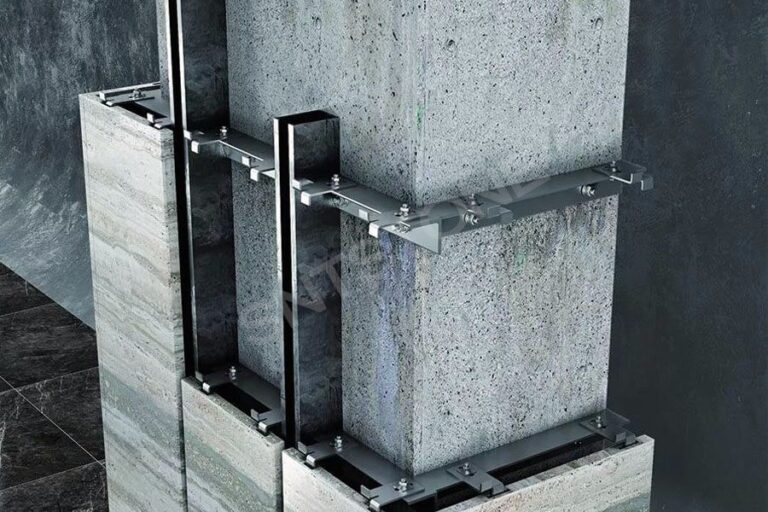
Cladding faces years of sun, rain, and temperature change with no chance to touch it up, which is exactly the kind of exposure that makes the Lapitec vs Dekton decision matter most for a façade. Dekton’s extreme-weather resistance was built with exactly that exposure in mind, and its broader palette gives a façade more visual range — a matte concrete look, a bolder graphic finish, a texture that reads differently at street level than natural stone does. Lapitec remains a sound choice for cladding as well, particularly where the goal is a continuous material language between an exterior wall and the interior floor or countertop it leads into.
Which should you choose for high-traffic indoor floors?
For high-traffic indoor floors, the Lapitec vs Dekton decision often comes down to a single trade-off: for floors that take heavy daily footfall — a lobby, a busy kitchen, a corridor between indoor and outdoor living — Dekton’s scratch resistance is the more direct answer to wear from grit, furniture, and foot traffic over time. Lapitec, full-body and heat- and UV-stable, remains the stronger choice where the floor continues outdoors, or where the goal is one continuous material reading indoors and out, as it does at YD House.
For climate-specific guidance on where sintered stone fits alongside marble, granite, and quartz, see MM Galleri’s guide to choosing stone for Indonesia’s climate. For full technical specifications straight from the manufacturers, see Lapitec’s own material overview and Cosentino’s official Dekton page.
Frequently asked questions about Lapitec and Dekton
Lapitec vs Dekton: Which Is Better for an Outdoor Kitchen?
It depends on what the counter faces most. Choose Dekton if the surface sits near open flame and needs fire resistance above all else. Choose Lapitec if UV stability and heat resistance across a full day of sun matter more than fire exposure specifically. Both are engineered sintered stones built for outdoor use.
Can Dekton be used indoors as well as outdoors?
Yes. Dekton’s ultra-compact, particle-sintered composition resists scratches, fire, and extreme weather, which makes it equally suited to an indoor kitchen countertop or a busy floor as it is to an exterior application. Its wide color and texture range also gives indoor projects more design flexibility than most natural stone offers.
Does Lapitec scratch or stain over time?
Lapitec resists stains as part of its full-body composition, since there is no surface coating to wear through.
Is Dekton fireproof?
Dekton resists fire and extreme weather by design, which is why it suits surfaces positioned near open flame, such as an outdoor kitchen counter beside a grill.
Which is more expensive, Lapitec or Dekton?
Pricing varies by finish, slab size, thickness, and project scope, so neither material carries a fixed rate. MM Galleri quotes both against a specific project rather than by the square metre — the honest answer is that the cheaper option depends entirely on what the surface has to do.
Can both Lapitec and Dekton be used for flooring?
Yes, both are engineered for floor applications. Lapitec suits floors that continue from indoors to outdoors without a change in material, as seen in the Lapitec Grigio Cemento floors at YD House. Dekton suits floors under heavy daily traffic where scratch resistance is the priority.
Sintered stone was never meant to imitate marble or granite — it was engineered to do what quarried stone sometimes cannot: sit under direct sun for a decade, survive a grill flame, or take the daily weight of a lobby without complaint. The Lapitec vs Dekton answer to that brief comes from two different directions, one built on full-body consistency, the other on compacted density and range of finish. The right choice has less to do with which stone is “better” and more to do with which counter, façade, or floor you are actually asking it to hold.