Innovative surface technology has reshaped modern architecture and interior design, allowing professionals to achieve durable, beautiful, and highly functional surfaces across residential and commercial projects. One of the most groundbreaking advancements in this field is sintered stone an engineered material designed to outperform natural stone, concrete, porcelain, and traditional composite products. Sintered stone offers advantages such as extreme durability, zero porosity, heat resistance, and UV stability. Brands like Dekton and Lapitec continue to lead innovation in this category, making sintered stone a top choice for long-lasting luxury surfaces.
What Is Sintered Stone?
Sintered stone is created through a manufacturing process that mimics the natural formation of stone deep within the earth. Advanced technology applies intense heat and pressure to natural minerals, compressing them into a solid, ultra-compact slab.
This process results in:
- Non-porous surfaces
- Uniform material structure
- Superior mechanical strength
- Long-term durability
Unlike quartz or composite stone, sintered stone does not contain resins or polyester binders, making it more stable under heat and sunlight.
Zero Porosity: The Core of Performance
One of the most unique features of sintered stone is its zero porosity, which prevents liquids and contaminants from penetrating the surface. This provides major performance benefits:
- No staining
- No mold growth
- No moisture absorption
- Easy cleaning and maintenance
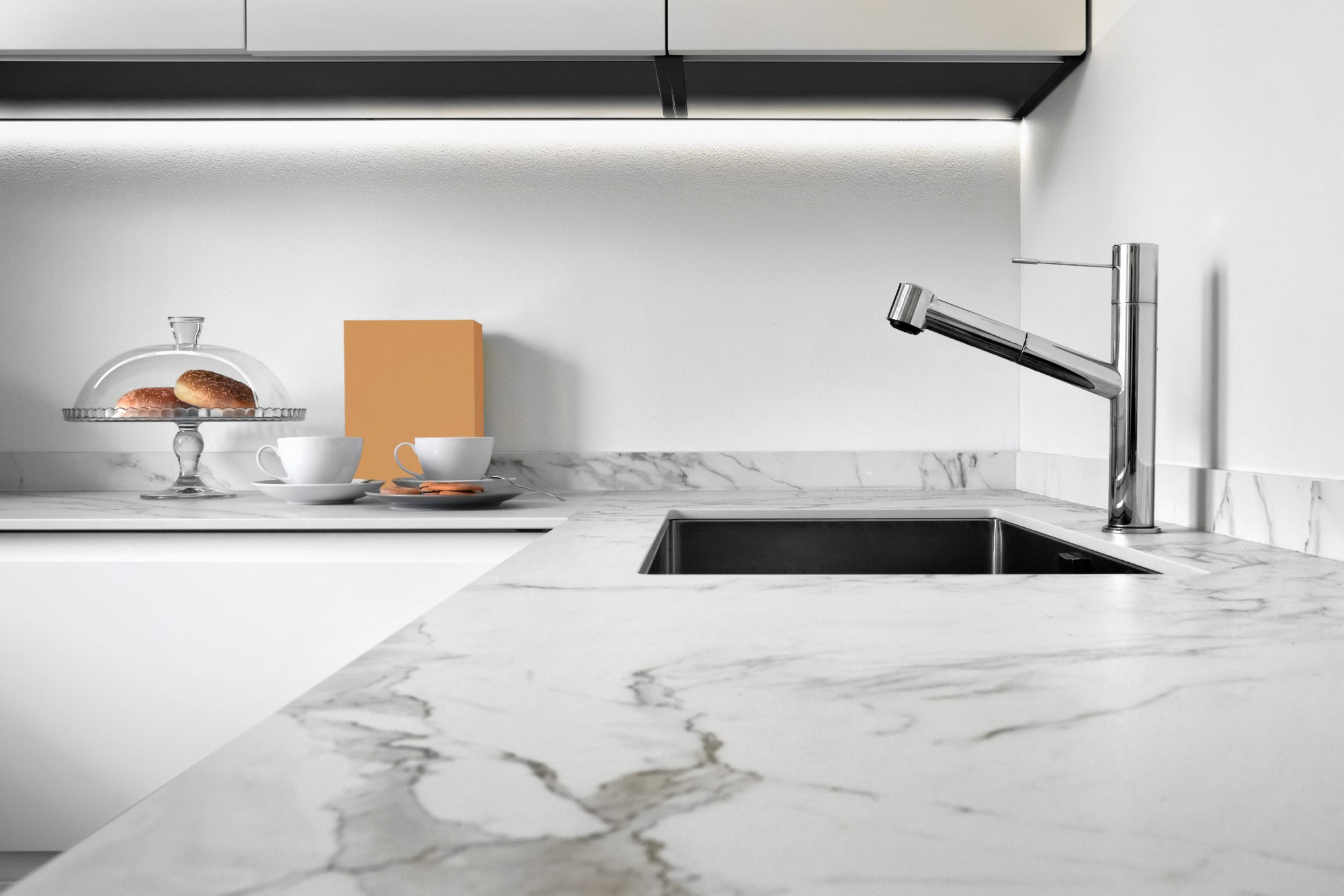
Zero porosity makes sintered stone perfect for kitchens, bathrooms, pool areas, and outdoor installation environments where water exposure is constant.
Heat, Scratch, and Impact Resistance
Sintered stone is engineered for durability in real-life conditions. Its dense surface is:
- Heat resistant — safe for hot cookware
- Scratch resistant — ideal for cooking and busy workspaces
- Impact resistant — suitable for heavy use areas
This durability far exceeds most natural stone and engineered countertops. It makes sintered stone one of the best surface choices for high-traffic commercial areas and family-friendly home design.
UV Stability for Indoor–Outdoor Design
One of the major innovations behind sintered stone technology is its UV stability. Unlike resin-based countertops that discolor in sunlight, sintered stone maintains its color and finish for decades.
This makes it suitable for applications such as:
- Outdoor kitchens
- Garden seating
- Pool surrounds
- Exterior cladding
- Rooftop terraces
Designers can use a single material both indoors and outdoors, creating seamless architectural continuity.
Large-Format Panels and Seamless Design
Modern design trends favor clean lines and uninterrupted surfaces. Sintered stone supports this with large-format panels that reduce joints and grout lines.
Applications include:
- Floor-to-ceiling bathroom cladding
- Monolithic kitchen islands
- Fireplace feature walls
- Commercial reception desks
- Hotel lobby surfaces
Fewer seams mean fewer maintenance problems and a more modern, minimalist aesthetic.
Chemical and Chlorine Resistance
Sintered stone surfaces remain stable even when exposed to harsh substances such as:
- Cleaning chemicals
- Cooking oils
- Saltwater
- Chlorine
This makes sintered stone ideal for hospitality, spa facilities, pools, and restaurants where surface integrity is critical over many years of usage.
Eco-Friendly and Sustainable Material Properties
Sustainable design is a major focus in innovative surface technology. Sintered stone is environmentally responsible because it is:
- Made from natural minerals
- Free of petroleum-based resins
- Low in VOC emissions
- Long lasting (reduced replacement waste)
Some sintered stone products contribute to green building certifications such as LEED, supporting sustainability in construction.
Versatility in Style and Design
Sintered stone is available in a wide range of designs, including:
- Marble-effect veining
- Concrete texture finishes
- Solid neutral tones
- Industrial matte colors
- Stone-inspired surfaces
These options make it easy for designers to match sintered stone with any interior or architectural style, from luxury minimalism to contemporary industrial aesthetics.
The Future of Surface Materials
Innovative surface technology continues to evolve, and sintered stone is at the center of that evolution. As manufacturing techniques advance, slab sizes grow larger, textures become more realistic, and performance features increase.
Future surface trends include:
- Integrated sink systems
- 3D textured paneling
- Book-matched veining patterns
- Ultra-thin façade systems
Sintered stone is expected to become even more dominant in the high-end design market.
Conclusion
Innovative surface technology has elevated sintered stone to the forefront of residential and commercial design. With its zero porosity, heat resistance, UV stability, and sustainability advantages, sintered stone offers unique features that outperform traditional surface materials. For architects, interior designers, and builders seeking cutting-edge performance with modern visual impact, sintered stone delivers a superior solution that stands the test of time.