Lapitec for facades has gained strong attention among architects, designers, and developers seeking a high-performance material for exterior building surfaces. With its unique combination of durability, UV resistance, and zero porosity, Lapitec is engineered to withstand demanding outdoor environments without fading, staining, or deteriorating over time. Unlike traditional cladding materials such as marble, granite, paint, or ceramic tiles, Lapitec delivers long-term structural and aesthetic benefits with minimal maintenance.
Why Exterior Facades Matter
The facade is the first visual element people notice when approaching a building. It sets the tone for architectural style, quality, and identity. But beyond aesthetics, facades must also protect structural elements from weather conditions, UV radiation, humidity, and pollutants. Poor-performing cladding materials can lead to long-term issues, including cracks, stains, fading, and water infiltration.
Lapitec is designed to solve these challenges by offering a surface that remains stable and visually consistent throughout the building’s lifecycle.
UV Resistance for Long-Term Visual Stability
One of the most impressive characteristics of Lapitec is its UV resistance, making it ideal for exterior use in sunny climates. Natural stones, paints, and composite cladding materials can fade or discolor when exposed to sunlight over time.
Lapitec, however, maintains its color and finish for decades, even under direct tropical sunlight. This makes it perfect for:
- Coastal homes
- Commercial buildings with glass facades
- Luxury villas
- High-rise installations
UV stability prevents long-term fading, ensuring facades look new year-round.
Zero Porosity: A Major Advantage in Tropical Conditions
Exterior cladding is constantly exposed to rain, humidity, and mold-causing environments. Traditional stone and tile materials often absorb moisture, which can lead to:
- Water stains
- Efflorescence
- Mold growth
- Surface cracks
Lapitec has zero porosity, meaning moisture cannot penetrate the material. Rainwater, pool splashes, and humidity simply roll off the surface, keeping facades clean and free from contamination. This is especially important for buildings located in tropical climates where year-round humidity is common.
Resistance to Pollution and Chemical Exposure
Urban environments expose facade materials to pollutants and airborne particles. Over time, these contaminants can adhere to exterior surfaces, causing discoloration and material degradation.
Lapitec is engineered to resist:
- Air pollution
- Acids
- Saltwater
- Industrial chemicals
Because the surface is non-absorbent, dirt and contaminants do not bond to it. Cleaning requires only water and mild detergent, greatly reducing maintenance costs for commercial buildings and multi-level structures.
Large-Format Panels for Seamless Cladding
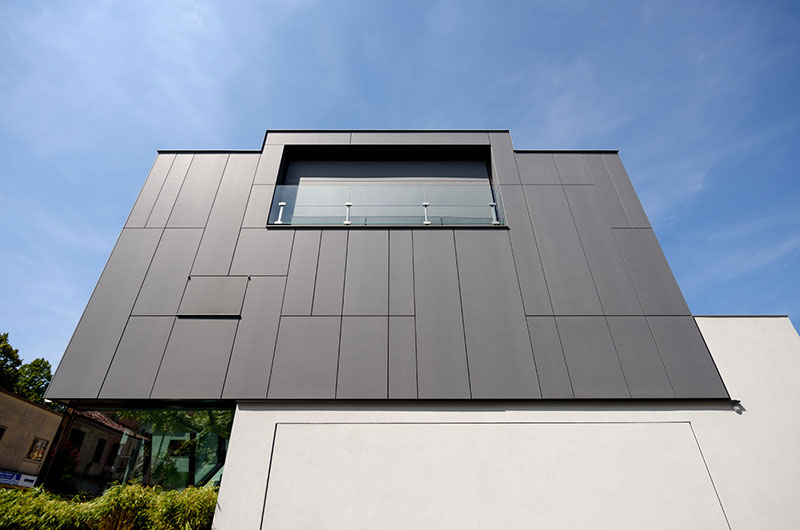
One of the main design benefits of Lapitec for facades is the ability to use large-format slabs. This allows architects to create sleek, modern exterior surfaces with minimal visible joints. Fewer seams contribute to:
- Enhanced structural stability
- Reduced dirt accumulation
- More elegant minimalist aesthetics
Large panels also simplify installation and reduce the risk of long-term facade failure due to joint issues.
Versatile Design Options
Lapitec comes in a wide range of textures and finishes suitable for exterior applications, including:
- Satin (smooth matte)
- Vesuvio (anti-slip texture)
- Urban (concrete look)
- Naturale (subtle natural stone grain)
These finishes support multiple design directions, from contemporary minimalism to industrial architectural concepts.
Color options include:
- Pure white
- Sandstone beige
- Concrete gray
- Slate black
- Soft neutral earth tones
This versatility allows Lapitec to complement glass, steel, wood, and other building materials effortlessly.
Sustainable and Eco-Friendly Facade Solutions
With environmental responsibility becoming increasingly important in architecture, Lapitec offers green benefits. It contains no resins, petroleum-based components, or silica binders. Its long lifespan reduces waste, and many products include recycling programs for construction cut-offs. Lapitec contributes to sustainable building certification standards and long-term energy efficiency when combined with proper insulation systems.
Conclusion
Lapitec for facades delivers exceptional performance in durability, UV resistance, zero porosity, and aesthetic versatility. As a highly reliable exterior cladding material, it outperforms traditional stone and tile surfaces, especially in tropical, coastal, and urban environments. For architects and designers seeking long-lasting beauty and low maintenance for exterior façades, Lapitec is a future-proof choice that enhances building value and visual impact.