A monolithic stone table is carved from one continuous block of stone — top, legs, and base sharing the same vein, the same mass, the same history. There is no seam to disguise, no veneer over a hidden frame, no laminate bonded to a substrate. What stands in the room is what the quarry gave, shaped and nothing more.
What Makes a Monolithic Stone Table “Monolithic”?
The word does the explaining, if you let it. Mono — one. Lithos — stone. One stone, from the underside of the top to the base of the last leg, with no joint where two pieces meet and no material change where the eye might expect one.
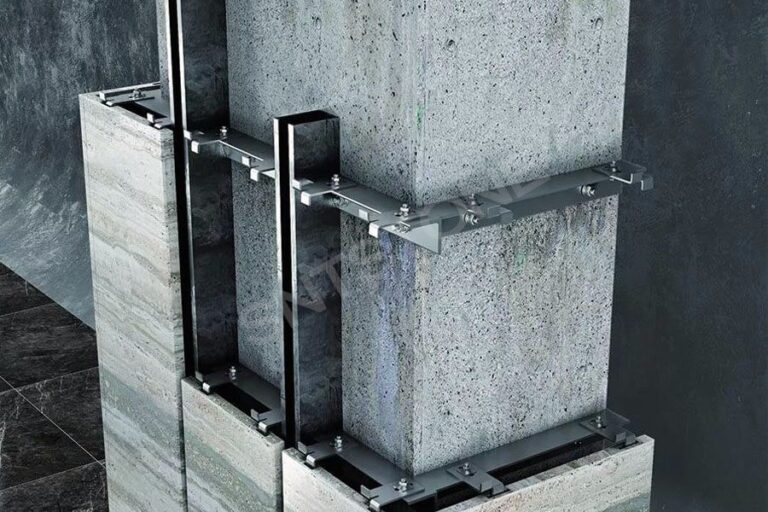
This sits at the opposite end of the spectrum from most of what a stone workshop produces day to day. A slab table, built the conventional way, is composed: a top cut from one piece, a base built separately in steel or wood or a second stone, the two joined by a fabricator’s hand. An 8mm laminated surface — the technique MM Galleri has refined since 2002 — takes stone thinner still, bonding it to glass, wood, or metal so the material can travel further, weigh less, and clad a wall or wrap a piece of furniture in ways a solid mass never could. Both are legitimate, considered approaches. Neither is monolithic.
A monolithic table refuses the substitution. The base is not standing in for the top; it is the top, continued. Turn the table over, look underneath, run a hand along the leg where it meets the floor — it is stone throughout, not stone applied to something else pretending to be stone. That continuity, more than size or weight, is the actual definition.
Why so few workshops attempt it
Carving a table from a single block is rare not because the idea is exotic, but because almost everything about the process resists it.
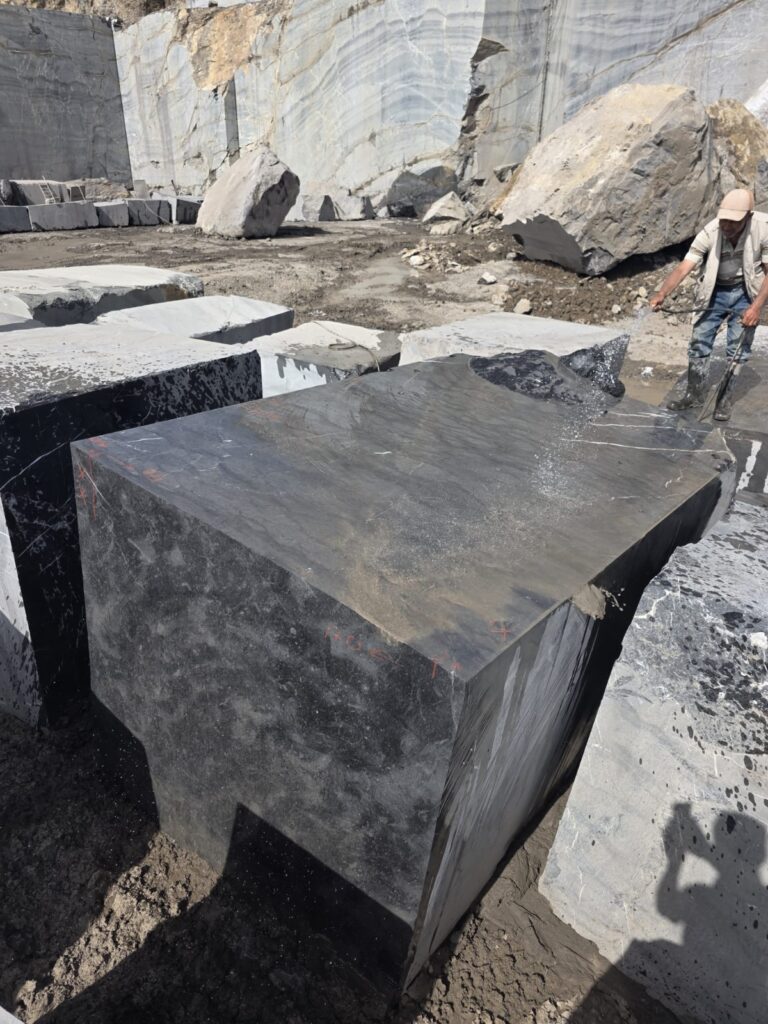
Weight. A block large enough to yield a full table — top, legs, base — starts its life as an enormous, uncooperative mass. Moving it from quarry to workshop to client’s home is its own engineering problem, one that grows with every centimeter of thickness the design calls for.
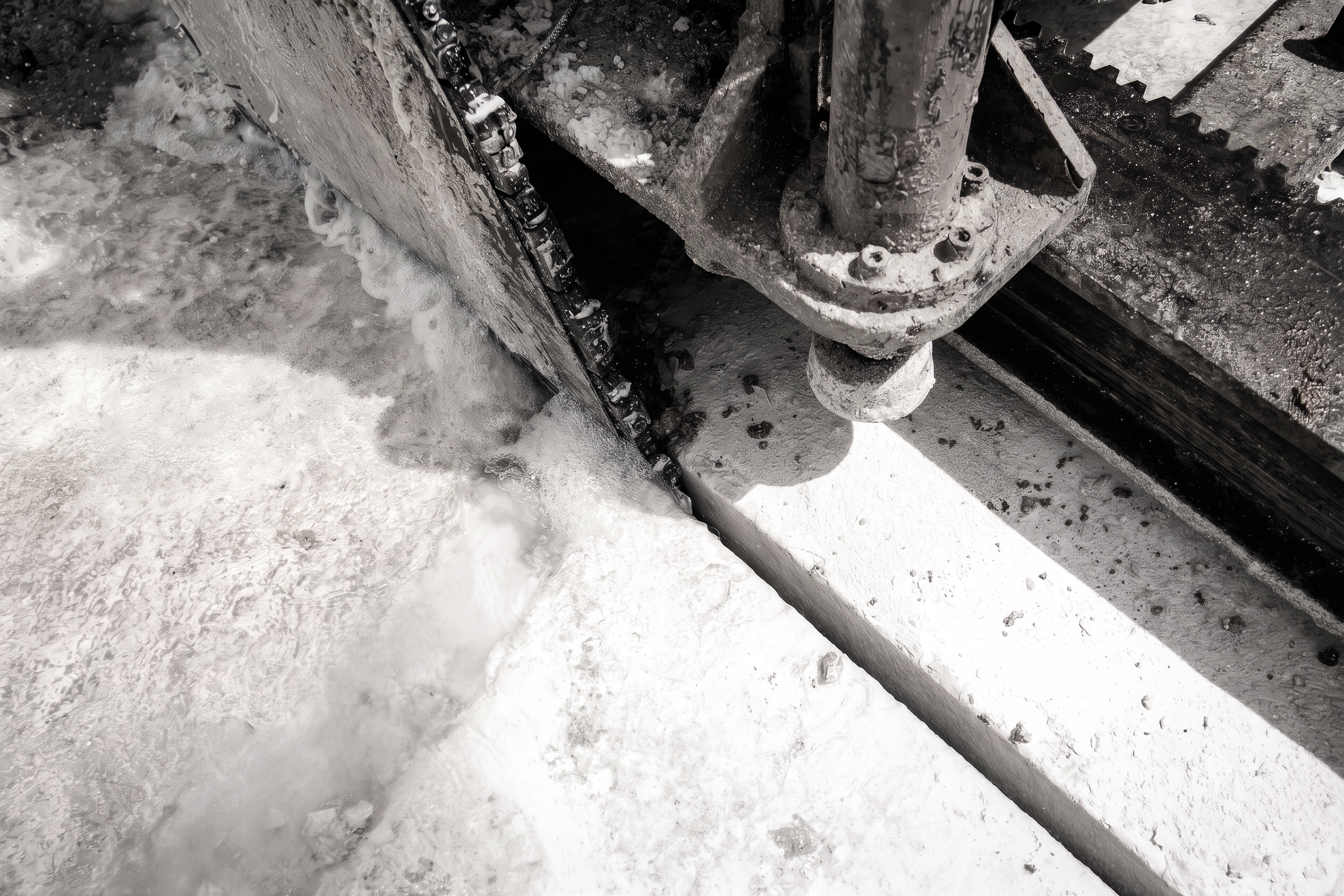
Waste. Where a slab table uses a top’s worth of stone and builds the rest from lighter materials, a monolithic piece is carved down from something far larger than the finished object. Everything that is not the table — every negative space beneath the top, every curve of a sculpted leg — is stone removed and set aside. The yield is low by design; there is no way around it.
Precision. A joint forgives. If a base and a top don’t align by a hair, a skilled fabricator adjusts the seam and moves on. A monolithic table offers no such correction. Every cut is final the moment it’s made, because there is no second piece to compensate for the first.
Consistency, above all. This is the quiet requirement that eliminates most blocks before carving even begins. A laminated panel or a slab top can be selected for its face — the side that will be seen. A monolithic table has no face to hide behind; every surface, from every angle, was once part of the same continuous mass, and any fracture, any dead patch, any abrupt shift in veining anywhere inside that block will surface somewhere in the finished piece. The block has to be right all the way through, not just on the side facing the room. Choosing it is less a purchase than a judgment call, made before a single cut confirms whether the judgment was correct.
The connection to Silhouette
MM Galleri has a name for the broader practice a monolithic table belongs to. Since 2020, Silhouette has been the studio’s term for fully three-dimensional stone art — sculptures, installations, bespoke architectural features translated from a client’s or designer’s vision directly into stone, no longer bound to the flat plane a slab or a wall cladding assumes.
A monolithic stone table is Silhouette’s domestic cousin. It doesn’t sit in a gallery or announce itself as sculpture, but it is built by the same logic: stone treated as volume to be shaped, not surface to be applied. The craftsman approaching a monolithic stone table asks the same questions a sculptor asks of a block destined for an installation — where the mass wants to thin, where it needs to stay dense to bear weight, how the veining will read once the excess is gone.
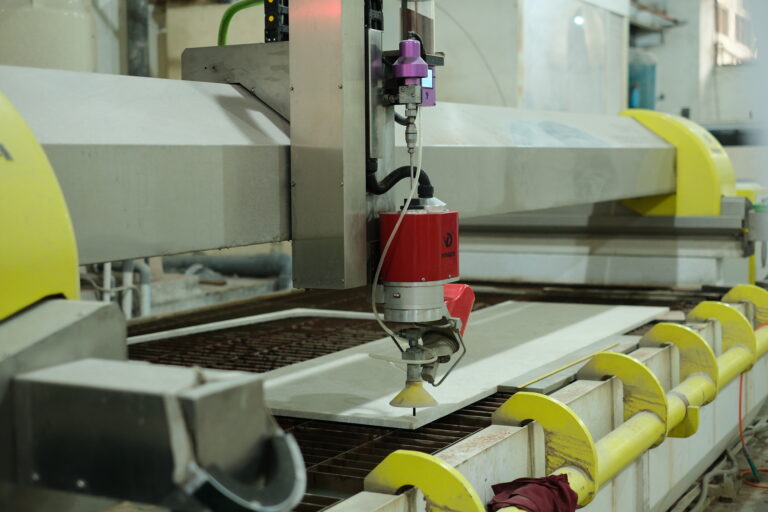
The table is furniture with a sculptor’s discipline underneath it, which is precisely what places it alongside multi-material furniture, CNC-machined geometric and organic patterns, and bespoke sculptural elements on MM Galleri’s list of custom work — capabilities that share a workshop, a set of hands, and a willingness to start from a raw block rather than a finished specification.
Monolithic Stone Table vs. Slab-on-Base Table
Both are legitimate paths to a finished piece of furniture. They simply start from different premises about what stone is for.
| Monolithic table (single block) | Slab-on-base table (veneered/composite) | |
|---|---|---|
| Construction | Carved from one continuous block; top, legs, base are the same stone | Slab top joined to a separately built base (wood, metal, or another stone piece) |
| Visual impact | Uninterrupted mass — no seam, no visual break between top and support | Top and base can contrast deliberately; seam is a design choice, not a flaw |
| Weight | Very heavy; often requires reinforced flooring and specialist installation | Lighter, since only the top is solid stone |
| Material yield / waste | Low — most of the original block is carved away to reveal the form | High — the slab is used efficiently, base uses separate, lighter materials |
| Precision required | Total; no joint to correct for misalignment or a compromised section | Forgiving; base and top can be fitted and adjusted independently |
| Cost & complexity | Higher — block selection, engineering, and carving time all scale with rarity | More moderate — established fabrication process, standard block sizes |
| Uniqueness | Every piece is singular by definition; the block cannot be replicated | Distinctive, but the top could theoretically be re-based or re-paired |
Neither column is the “better” choice in the abstract. A slab-on-base table serves rooms, budgets, and logistics that a monolithic piece cannot. A monolithic table serves a different ambition entirely — the one where the object itself is the point, and the room is arranged around it rather than the other way around.
Why monolithic furniture is having a moment
Interior design in 2026 has been circling back toward objects with unmistakable physical presence — furniture and architectural pieces described as monumental, sculptural, almost geological in how they occupy a room, after a long stretch favoring lightness, thinness, and material that disappears into a scheme rather than anchoring it. A monolithic stone table sits comfortably inside that shift, not because it was designed to chase a trend, but because the qualities the trend is reaching for — mass, permanence, an object that reads as found rather than assembled — are exactly what carving from a single block has always produced. The workshop practice is old. The appetite for what it makes has simply caught back up to it.
The workshop where this happens
MM Galleri’s factory and flagship showroom has stood in Surabaya since 1992, and it’s there — not in a design brief, not in a rendering — that a monolithic table actually gets made: a block assessed by hand and eye before it’s approved for carving, then removed from, patiently, until a table is what’s left. It is slow work, unglamorous in the doing, and it produces objects that owe their character to exactly one decision made at the very start — which block, and whether it was honest all the way through.
A monolithic table sits at the opposite end of the spectrum from 8MM laminated marble — one carves away everything that isn’t the object, the other removes as little stone as possible. The wider design world is circling back to this kind of mass and presence too; Stone Moods’ piece on monolithic stone kitchen islands tracks the same 2026 shift toward sculptural, single-form stone furniture.
Frequently asked questions
What is a monolithic stone table made of?
It’s carved from a single block of natural stone — commonly marble or granite — with no additional materials joining the top to the base. The entire object, including any legs or supporting mass, comes from the same continuous piece, which is what distinguishes it from a table with a separately built base.
Why are monolithic stone tables so expensive?
Cost follows scarcity and risk. A block large enough to carve a full table must be free of flaws throughout its mass, not just on one visible face, and most of that block is removed as waste during shaping. Add specialist handling for the weight, and the price reflects a low-yield, high-precision process rather than a marked-up material.
Can any type of stone become a monolithic table?
In principle, yes, though density and consistency matter more than the name of the stone. Marble and granite are the most common choices because large, structurally sound blocks are more reliably available in those categories, and their veining or grain reads clearly across an uninterrupted mass.
How Is a Monolithic Stone Table Different From a Slab Table With a Stone Base?
A slab table joins a stone top to a separately built base, so there’s a visible or engineered seam where the two meet. A monolithic table has no such joint anywhere — the base is not a different piece supporting the top, it’s the same block, continued downward.
How long does it take to carve a monolithic stone table?
Timelines vary with the block’s size, the design’s complexity, and how much material has to be removed to reach the finished form, so there’s no single figure that applies across projects.
Is a Monolithic Stone Table Related to MM Galleri’s Silhouette Pieces?
Closely. Silhouette, MM Galleri’s sculptural stone practice since 2020, treats stone as three-dimensional volume rather than flat surface — sculptures, installations, bespoke architectural features. A monolithic table applies the same carving logic to a functional object, which is why the two sit naturally alongside each other in the workshop’s custom work.
A monolithic stone table asks for patience before it asks for anything else — the patience to find a block honest enough to survive its own removal, and the discipline to take away everything that isn’t the table until the table is all that remains. That is the whole of the craft, and it is also, in the end, the whole of its appeal.