Why is marble expensive? Mostly because so little of a quarry becomes a usable slab. Price follows rarity, the size and soundness of each block, how consistent its colour and veining are, how far it travels, and the work it needs afterwards — thickness, finish, mitres, bookmatching, cut-outs — plus the waste every cut leaves behind.
Two slabs can look alike in a showroom and differ several times over in price. The difference is rarely arbitrary, and most of it was set before the stone reached the yard.
Why is marble expensive before it leaves the quarry?
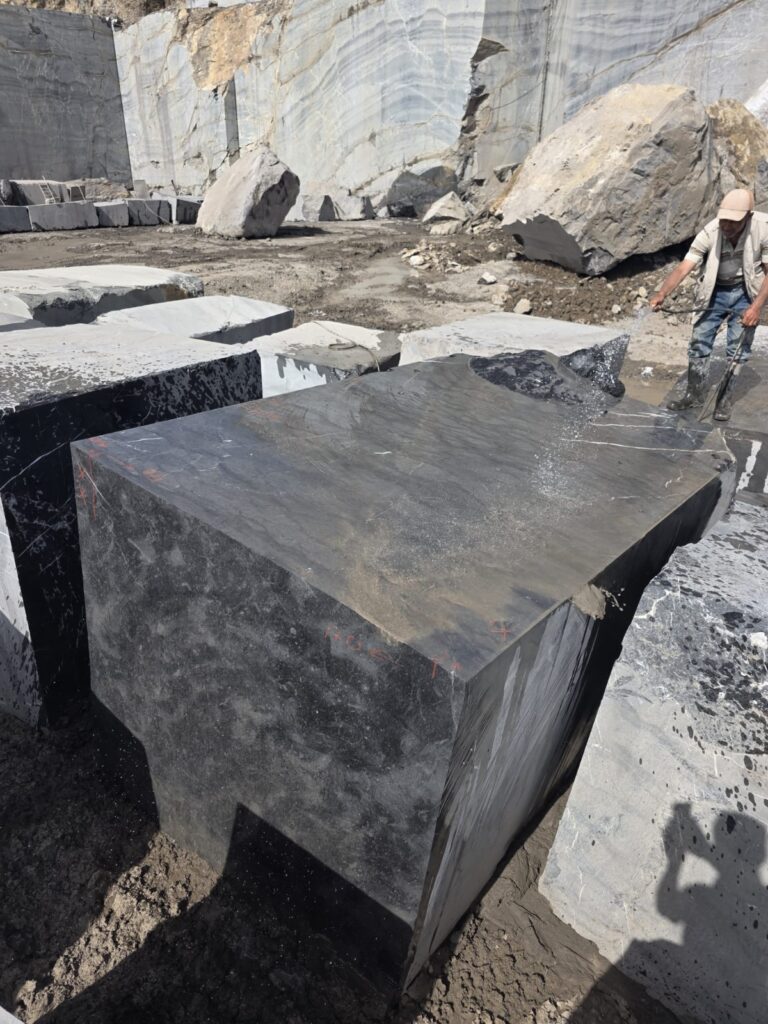
A marble quarry is not a warehouse of slabs waiting to be cut. The rock is fractured by the same geological forces that made it, and a great deal of what is extracted is too cracked, too small or the wrong colour to become a dimension block. That material ends as rubble, aggregate or powder. At many quarries, only a minority of the rock removed leaves as a saleable block, and every block that does still has to prove itself on the saw.
Each block is then sliced, and every pass of the blade turns a strip of marble into dust. Slabs are commonly cut at 20 or 30 millimetres; the thicker the slab, the fewer come from one block, and the more of the block’s cost each one carries.
What makes one marble rarer than another?
Geology decides first. Some marbles occur in wide, consistent beds that can be worked for generations; others exist in a single seam in one mountainside, and when that seam narrows, the supply of that particular look narrows with it. Access, permits and the depth of workable benches limit supply further. Demand does the rest. The whitest beds, with bold veining on a clean ground, are scarcer than the greyer, finely veined stone around them and are priced accordingly — our comparison of Statuario, Calacatta and Carrara shows how that plays out between three marbles from the same region.
How do block size and soundness change the price?
A large, sound block yields full-size slabs, and full-size slabs are what large surfaces need: an island without a joint, a wall that bookmatches floor to ceiling. A fissured block produces smaller slabs, more offcuts and more resin, and the stone trimmed away is still paid for. This is why one marble can sell at different prices from block to block. Size and soundness are part of the grade.
Why does consistent colour and veining cost more?
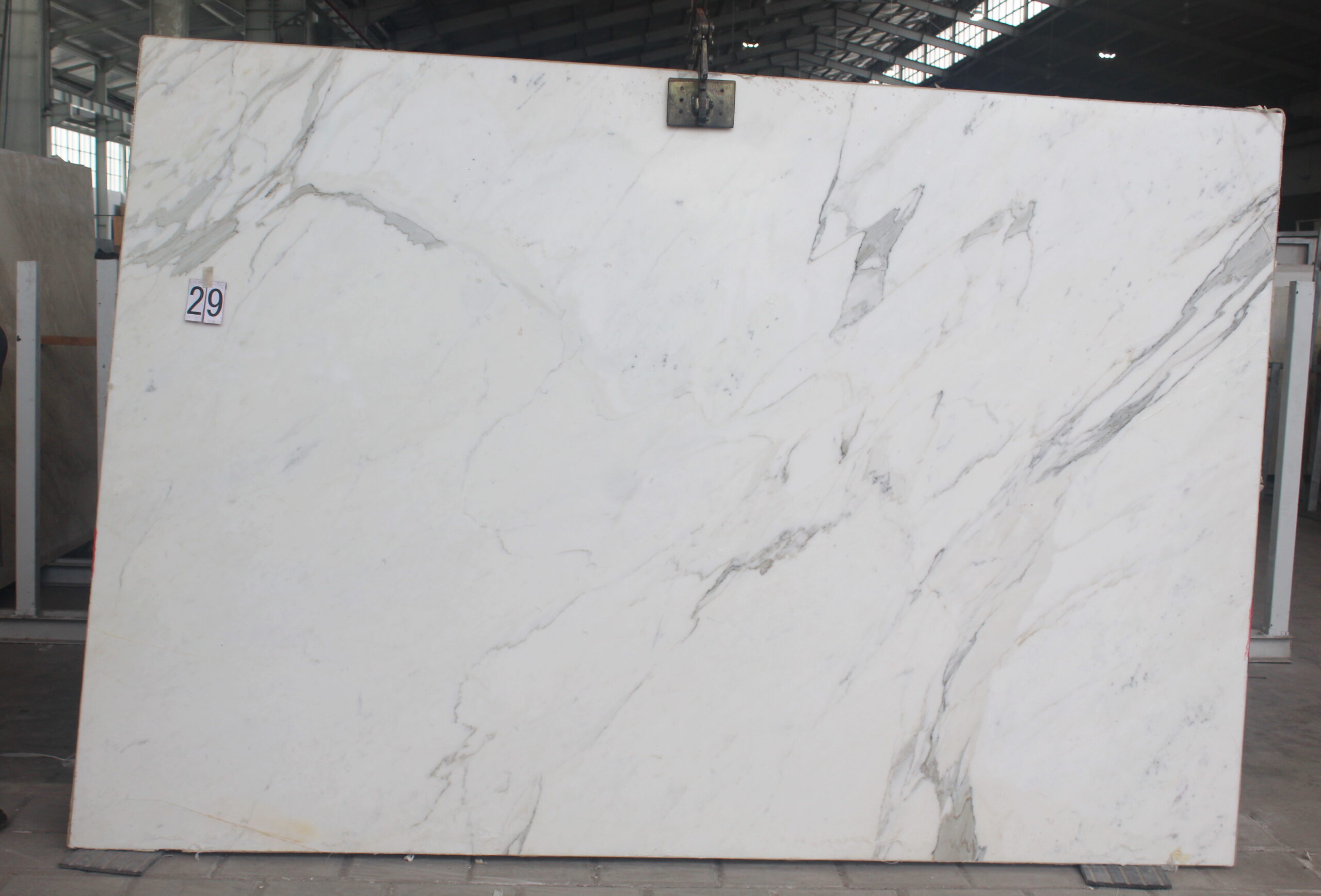
Within any one stone, slabs are graded. The better grades have an even ground colour, well-placed veining and few fills; the lower grades carry more variation, more treatment, or pattern in the wrong places. A project that needs many slabs of one appearance — a hotel lobby, a run of identical bathrooms — needs a large block or several from the same bench, and that consistency is scarce in itself. Paying for grade is paying for predictability.
How much do origin and freight add?
Stone is heavy, and much of the world’s most sought-after marble travels a long way. Blocks and slabs from Italy, Greece, Turkey, Brazil and elsewhere are crated, shipped, insured against breakage and held in yards before sale, and duties and handling vary by country. None of it adds beauty, yet together it can be a meaningful share of what a slab costs by the time it reaches Southeast Asia.
Do thickness and finish change the price?
Thickness does, directly: more material per square metre, fewer slabs per block, more weight to move. Finish does too, though less. A Polished or Honed face is part of normal processing; textured finishes such as Leather, Flamed or Sandblast add further passes, and sculptural surfaces such as Flute or Sierra add machining time. Our guide to honed, polished and leather finishes explains what each does to the stone.
Why does fabrication add so much?
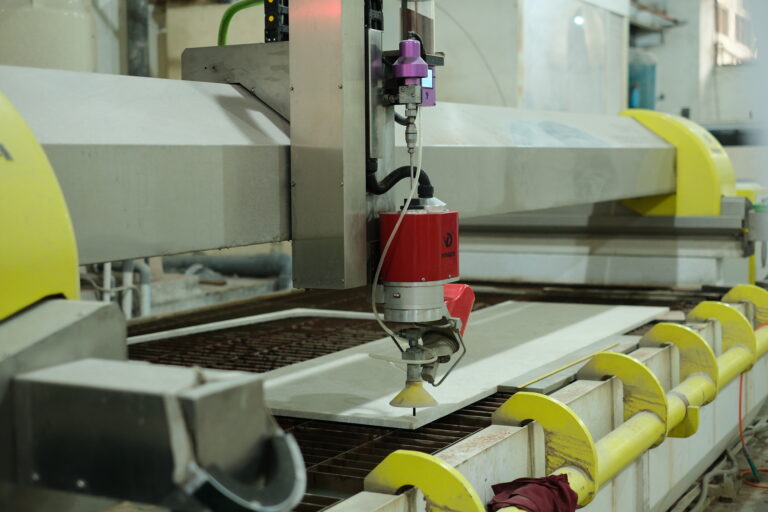
Cutting a slab into a kitchen or a wall is where much of the final price is made. A mitred edge, where two pieces are cut at 45 degrees and joined so a slab reads as a thick block, needs precise cutting, careful bonding and veining that turns the corner. Bookmatching needs consecutive slabs and sacrifices material to align the pattern. Every sink, hob and tap cut-out adds machining and risk, since a slab can crack at a corner at the very last step. Curves, inlay and hand finishing multiply all of it.
Then there is wastage. Offcuts, areas avoided for a fissure, strips lost to vein alignment: all of it is still part of the price. You buy the whole slab, not the square metres installed.
Why do resin and mesh reinforcement matter?
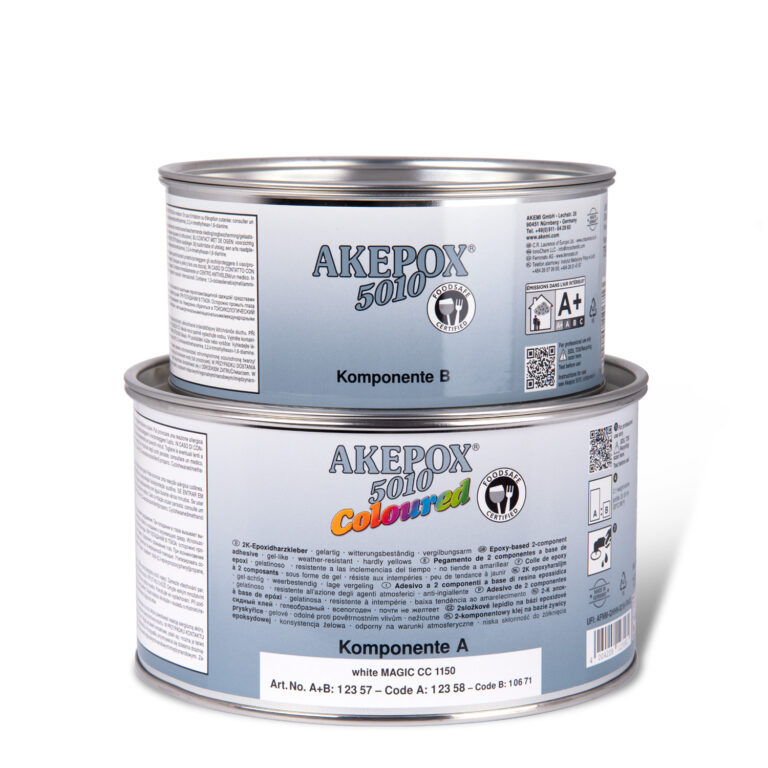
Many of the most expressive marbles — breccias, strongly coloured stones, those laced with dense veins — would not survive cutting and shipping in their raw state. They are filled with resin to close pores and fissures and backed with fibreglass mesh bonded to the reverse. The treatment is skilled work and adds cost, but it is often the reason a fragile, extraordinary stone can be used at all.
How does 8MM change the yield equation?
If much of marble’s price is the scarcity of good blocks, the most direct answer is to get more surface from each one. In 2002, MM Galleri began slicing natural stone ultra-thin and laminating it to a backing, an approach that yields 40% more slabs from one block. For rare stones on walls and furniture, where full thickness adds weight that nobody sees, that changes the arithmetic of a project. The 8MM page explains how it works.
What drives the price of a marble slab?
| Factor | What it means | Effect on price |
|---|---|---|
| Quarry yield | Share of extracted rock that becomes sound blocks | Low yield raises the cost of every slab |
| Rarity | How much of a colour or pattern the geology holds | Single-seam stones cost far more than widely quarried ones |
| Block size and soundness | Block dimensions and fissures | Large, sound blocks give full slabs and command more |
| Consistency | Evenness of ground and veining across slabs | Higher grades and matched sets cost more |
| Origin and freight | Distance, crating, insurance, duties, storage | Adds cost unrelated to appearance |
| Thickness | 20mm, 30mm or thin laminated | Thicker means fewer slabs per block and more weight |
| Finish | Standard, textured or sculptural surface | Textured and sculptural finishes add processing |
| Fabrication | Mitres, bookmatching, cut-outs, curves | Each adds labour and risk |
| Reinforcement | Resin filling and mesh backing | Adds cost; makes fragile stones usable |
| Wastage | Material lost to layout, veining and defects | You pay for the whole slab |
Is expensive marble always better?
No, and it is worth saying plainly. Price in marble mostly reflects scarcity and appearance, not performance. A rare white marble etches under lemon juice exactly as a common one does, and a modest, well-chosen stone will outlast an expensive one specified for the wrong room. Our advice is to spend on rarity where it will be looked at — a feature wall, an island, a single bookmatched panel — and choose a quieter, more forgiving stone where it will mostly be walked on. The easiest place to see where that line falls is side by side, in a showroom.
Frequently asked questions
Why is Calacatta more expensive than Carrara?
Calacatta comes from scarcer beds with a whiter ground and bolder, more dramatic veining, while Carrara is quarried more widely and has a softer grey ground with fine veining. Both come from the same region of Tuscany, but far less Calacatta is available in large, consistent blocks, and demand for its look remains high.
Is thin marble cheaper than standard slabs?
Per square metre of visible surface it can be, particularly for rare stones, because more slabs come from each block: MM Galleri’s 8MM approach yields 40% more slabs from one block. Laminating adds its own processing, so any saving depends on the stone and the application. Thin laminated panels suit walls and furniture especially well.
Why do slabs of the same marble have different prices?
Because slabs are graded individually. Ground colour, the placement and density of veining, the number of fills and fissures, and the size of the slab all vary within one stone, even between blocks from the same quarry. A large slab with an even ground and well-placed veining is scarcer than a smaller, busier one, and is priced as such.
Why do marble prices change over time?
Supply depends on quarries that open, deepen, run into poorer rock or close, and demand follows design fashion. Freight costs, exchange rates and duties shift as well. When the seam behind a particular marble narrows, its price tends to rise; when a look falls out of favour, stock of it can become easier to find.
Ask “why is marble expensive?” and the answer, in the end, is time: the ages it took to form, the rock lost to find it, and the hands it passes through before it reaches a room.