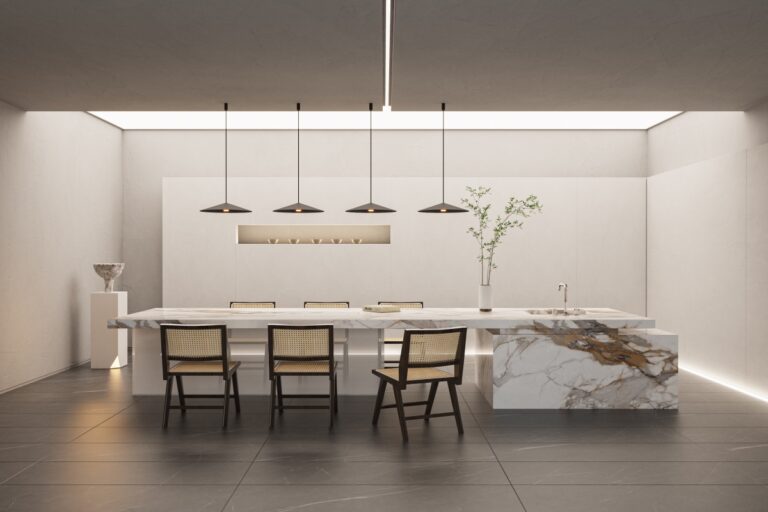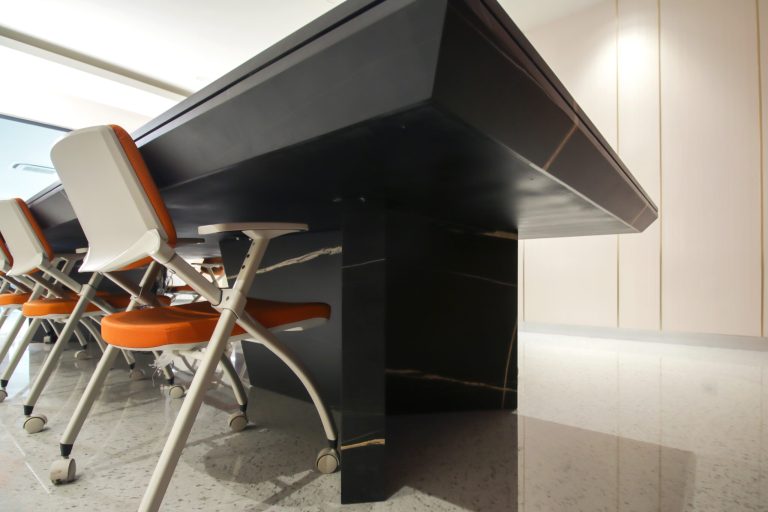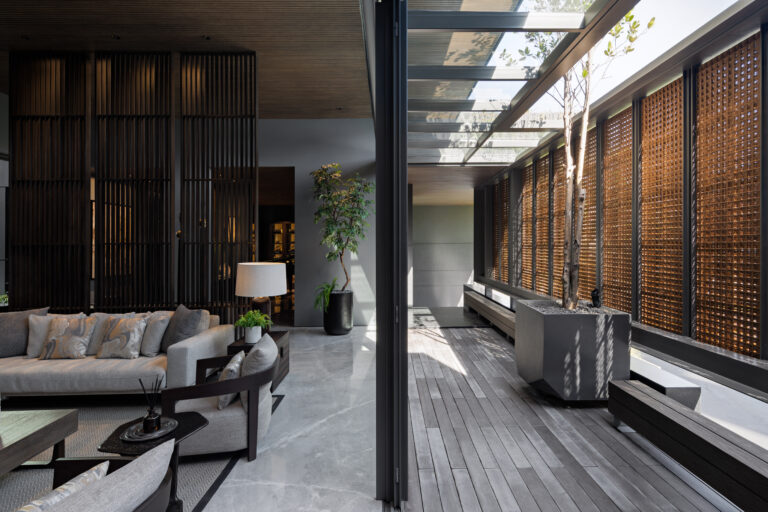
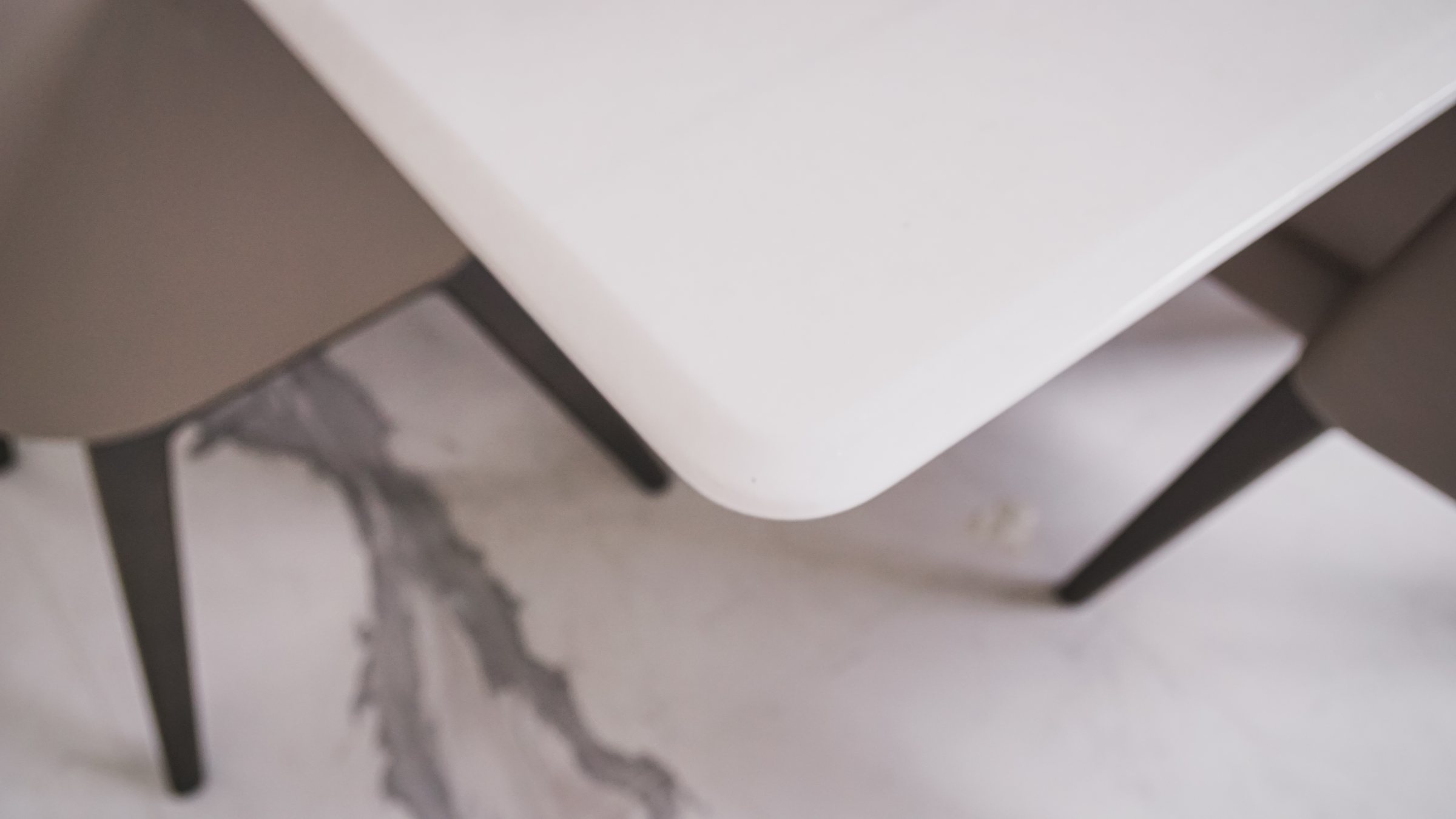
Countertop edge profiles range from the plain eased edge to the rounded bullnose, the classical ogee and the deep mitred edge. On marble, rounded and slightly eased profiles chip least and clean most easily, while sharp squares and intricate ogees need more care. The right choice follows the room’s style and the slab’s thickness.
The edge is the part of a countertop that is actually lived with. Hips brush it, hands lean on it, a cast-iron pan catches it on the way to the hob. It is also the line the eye follows along an island, so a profile that looks like a small detail on a drawing ends up setting the character of the whole kitchen. On a soft, veined stone like marble, it decides how gracefully that kitchen ages.
What are the main countertop edge profiles?
Most fabricators work from the same family of shapes. The names vary a little between workshops, so it is worth confirming each one against a drawing or a sample piece.
Eased and square edges
A square edge is exactly what it sounds like: a flat face meeting the top at a right angle. An eased edge is the same shape with the sharp corner very slightly softened, usually by a small radius of a few millimetres. It still reads as crisp and architectural, but it is kinder to hands and far less likely to chip. For most contemporary kitchens, the eased edge is the quiet default, and rightly so.
Bevelled edge
A bevel cuts the top corner away at an angle, typically 45 degrees, leaving a narrow sloping facet. It catches light along its length, which suits polished stone, and it sits comfortably between modern and traditional rooms. A larger bevel reads as a deliberate detail; a small one simply protects the corner.
Half and full bullnose
A half bullnose rounds the top of the edge and leaves the underside square. A full bullnose rounds both, producing a soft, pillowed edge like a stair nosing. Both are forgiving to bump into and resistant to chipping, and both suit family kitchens and softer, more traditional rooms. The full bullnose has one quirk worth knowing: with no lip to stop it, a spill rolls straight over the edge onto the cabinet fronts and floor.
Ogee
The ogee is an S-shaped curve, concave then convex, borrowed from classical architecture and joinery. It belongs with polished marble in traditional interiors, where a Statuario or Calacatta top with an ogee edge looks as though it has always been there. It asks for more thickness than most profiles and more care in cleaning, since its grooves hold dust and residue.
Mitred (built-up) edge
A mitred edge joins a second strip of stone to the top at a 45-degree angle, so the top appears to be a solid block of 4cm, 6cm or deeper. Cut from the same slab in sequence, the veining turns the corner and runs down the face. It is the edge behind most monolithic-looking islands, and the most skilled of these profiles to make well.
Waterfall edge
A waterfall carries the mitre all the way to the floor, so the stone drops vertically at the end of an island or counter in one continuous fold. It is less an edge profile than a piece of furniture, and it needs careful slab planning to keep the veining unbroken.
Which edge profile chips least on marble?
Marble is made largely of calcite, a soft mineral, so an edge takes knocks that a quartzite or sintered surface would shrug off. The shape of the corner decides how that knock is received. A sharp arris concentrates the impact on a thin line of stone and breaks it away; a rounded edge spreads the same impact over a curve.
In practice, the full and half bullnose are the most forgiving at the top edge, followed closely by an eased edge with a generous radius. The bevel does well because it has no knife-edge to lose. A true square edge chips most readily, and so can the fine ridges of an ogee. A mitred corner is sharp by nature, which is why good fabricators ease it slightly rather than leaving it razor-crisp.
When a chip does happen, it is rarely the end of the stone. A skilled fabricator can often fill it with colour-matched resin and polish it back, especially on a honed or leathered surface where the repair blends in more easily.
Which edge profiles are easiest to keep clean?
Simple profiles clean in a single pass of a cloth. An eased, square or bevelled edge has nothing to trap crumbs, grease or cleaning residue. The ogee is the hardest to keep, because its hollows collect whatever the cloth misses and marble dislikes the stronger cleaners people reach for when grime builds up. Our guide to cleaning and caring for marble covers what is safe to use on the stone.
The finish matters as much as the shape. An edge should be finished to match the top, and a polished edge shows fingerprints and etching along its length just as the surface does. A honed edge hides more of that daily wear; the honed vs polished finish guide explains the trade-off in detail.
Which edge profile suits which interior style?
Among countertop edge profiles, style is where the choice usually begins, and the rules are gentle rather than fixed.
- Contemporary and minimal rooms suit eased, square, mitred and waterfall edges. The less the edge draws attention to itself, the more the veining carries the design.
- Transitional rooms, which mix classic and modern, suit a bevel or a half bullnose: softened, but still clean-lined.
- Traditional and classical rooms suit the ogee and the full bullnose, especially with polished marble.
- Hard-working family kitchens are best served by a half bullnose or a generously eased edge, which forgive both children and cast-iron pans.
Does slab thickness limit the edge profile you can choose?
Yes, thickness quietly narrows the countertop edge profiles open to you. A 2cm slab is about ¾ of an inch thick, which leaves little depth for an ogee or a full bullnose; the curve comes out shallow. Fabricators usually solve this by laminating a strip of stone underneath to double the thickness, then cutting the profile through both layers. The result has the right depth, though a fine glue line may show within the profile.
A 3cm slab has room for most profiles cut from the solid. For a crisp modern look on 2cm stone, the mitred edge is the natural answer: it adds visual depth without adding a seam to the face.
Countertop edge profiles compared
| Profile | Look | Chip resistance on marble | Ease of cleaning | Suits | Thickness notes |
|---|---|---|---|---|---|
| Square | Crisp, architectural | Low | Easy | Minimal, contemporary | Works on any thickness |
| Eased | Crisp, slightly softened | Good | Easy | Contemporary, most kitchens | Works on any thickness |
| Bevelled | Angled facet that catches light | Good | Easy | Transitional | Works on any thickness |
| Half bullnose | Rounded top, square underside | Very good | Easy | Family kitchens, transitional | Works on 2cm; fuller on 3cm |
| Full bullnose | Fully rounded, soft | Very good | Easy, but spills run off | Traditional, family kitchens | Needs 3cm or laminated 2cm |
| Ogee | Classical S-curve | Moderate; fine ridges can chip | Harder; grooves trap dirt | Traditional, classical | Needs 3cm or laminated 2cm |
| Mitred | Deep, monolithic block | Moderate; ease the corner | Easy | Contemporary islands | Ideal for making 2cm look thick |
| Waterfall | Stone folds to the floor | Moderate at the mitred corner | Easy | Statement islands | Needs slab planning for veining |
Frequently asked questions
What is the most practical edge profile for a marble kitchen?
An eased edge with a slightly generous radius is the most practical all-rounder. It looks clean and contemporary, cleans in one pass and resists chipping far better than a true square edge. Where children or heavy pans are part of daily life, a half bullnose is even more forgiving, at the cost of a softer look.
Can an edge profile be changed after installation?
Sometimes, within limits. A fabricator can often re-cut a square edge into an eased edge, a bevel or a half bullnose on site, because those profiles remove stone rather than add it. Turning a simple edge into a deep ogee or a mitred edge is rarely practical once installed, so decide on the profile before fabrication.
Does a mitred edge crack or separate over time?
A well-made mitred edge is strong. The two pieces are bonded with colour-matched epoxy and, where needed, reinforced from behind, so the joint should not open. Its weakness is the sharp outer corner, which can chip under a hard knock. Asking for that corner to be slightly eased protects it without spoiling the monolithic look.
Should the edge be polished if the top is honed?
The edge should normally match the top. A polished edge on a honed surface reads as a separate band of shine, and it will show fingerprints and etching that the honed top hides. If you want the edge to stand out deliberately, discuss it with your fabricator, but matching finishes is the safer and more timeless choice.
An edge is only a few centimetres of stone, yet it is the part a hand finds first and the line an eye follows longest; chosen well, it lets the slab above it speak without interruption.